RentRedi Alternatives: What to Switch To by Reason (2026)
The right RentRedi alternative depends on why you're leaving: TurboTenant free, Rentec for real books, Innago for cheaper tenant fees. Verified Nov 2026.

Leaving RentRedi is a reason decision before it is a price decision: $144 a year flat for unlimited units is the hardest invoice in this category to beat. The honest top three, checked against vendor pages and our own dated reviews on 10 November 2026: TurboTenant if your reason is paying nothing, Rentec Direct if it is real accounting ($25 flat to ten properties), and Innago if it is the fees your tenants pay.
Disclosure: Landlord Method doesn’t earn a commission from any platform in this guide — none of these affiliate programs is live on this site. Prices and fees come from the vendors’ own pages and help centers, read on the dates noted, or from one of our dated reviews.
The decision table
| If your reason is… | Pick | What it costs | The trade |
|---|---|---|---|
| Free software | TurboTenant | $0, unlimited units; tenants pay $2 per ACH (3 Nov 2026) | Real accounting sits behind Pro at $199/yr |
| Real books, and the smallest paid bill | Rentec Direct Starter | $25/month flat to 10 properties; double-entry from Starter (10 Nov 2026) | A dated interface; trust accounting and the owner portal start at PM, $50 |
| Tax-ready books, from $0 | Baselane Core / Stessa Manage | Baselane $0 with Schedule E; Stessa $12/month billed annually for it (10 Nov 2026) | Thin front office — no leasing workflow worth using |
| Best mobile of these | TurboTenant | $0, then $149–$999/yr by unit band (10 Nov 2026) | Free-tier payouts run a reported 5–10 days |
| 20+ units with real books | Buildium | $65/month to 20 units, $84 to 40 (5 Nov 2026) | Fee stack, and $202 from unit 41 |
| Cheaper tenant fees | Innago | $0 to you; $2 ACH, 2.99% cards, $30–35 screening (6 Nov 2026) | Its ACH is $2, double RentRedi’s $1 |
TurboTenant takes two rows: strongest mobile of the $0 options, though Innago also ships a free native landlord app.
Why landlords look for RentRedi alternatives
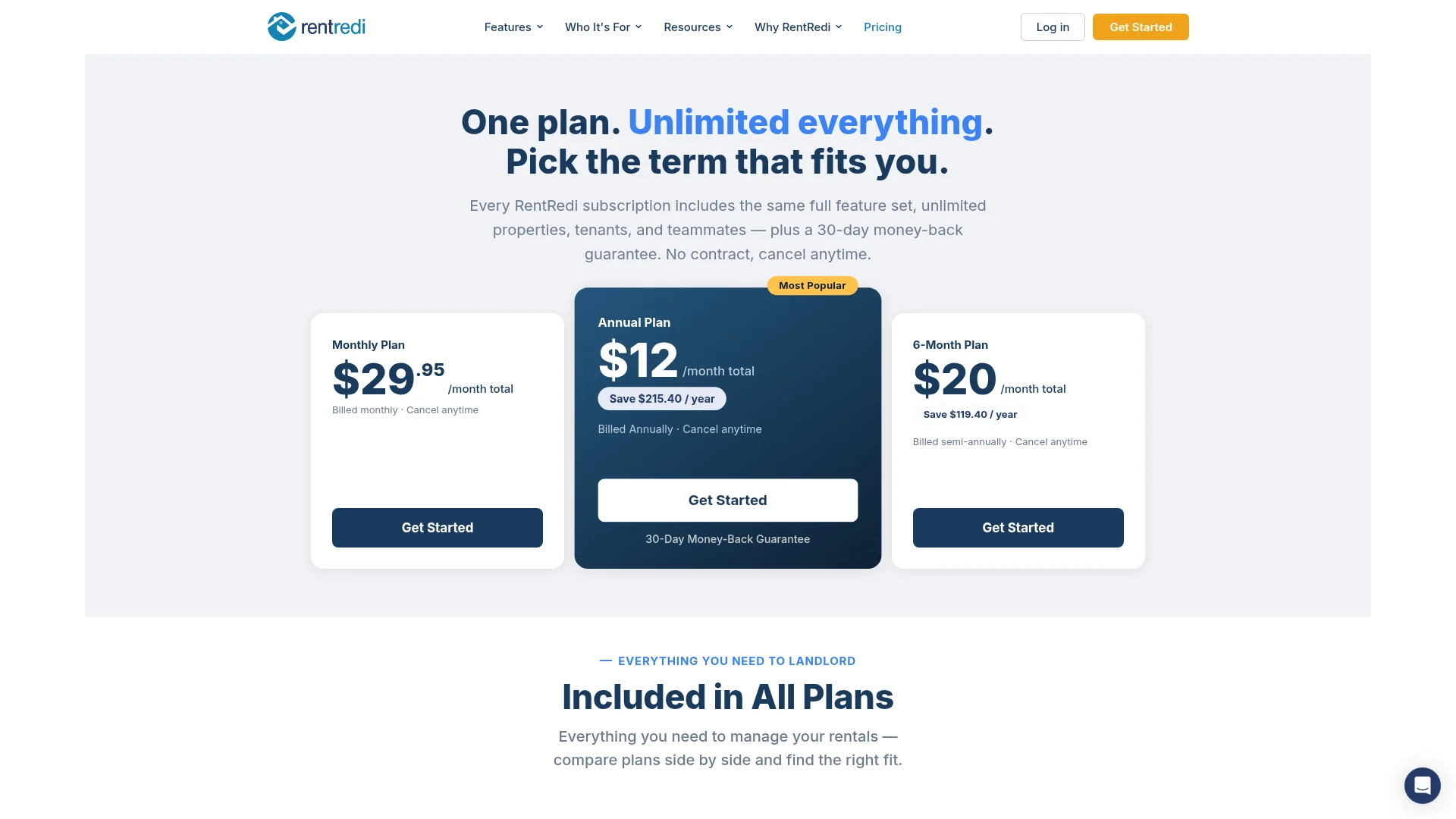
The fees land on your tenants. RentRedi charges tenants $1 per ACH payment and 3.1% plus $0.30 on cards — $48.30 on a $1,500 card payment, because RentRedi grosses the fee up so you receive the full rent: (1,500 × 0.031 + 0.30) ÷ (1 − 0.031) (RentRedi’s help center, 10 November 2026). Applicants pay $39.99 for screening, $49.99 with income verification. Screen three applicants per vacancy and that is $119.97–$149.97 of other people’s money for one decision; you can absorb the fee in settings, but nobody switches to RentRedi for the fee schedule.
The accounting has a ceiling. RentRedi’s Accounting Suite appears on every plan — P&L, bank feeds, AI receipt capture, one-click Schedule E summaries — and it is expense-level reporting, not books: no general ledger, no trust accounting, no owner statements at any tier. Full double-entry means bolting on something like REI Hub.
The flat price stops being flat. $12 a month holds; the per-unit services do not. Latchel maintenance coordination, sold through RentRedi, is not a flat rate: plans start at $25 a month plus a per-unit fee, and RentRedi quotes the per-unit rate during setup (RentRedi Help Center, 10 November 2026). Zillow Network listings cost $1.75 per listing per day.
The web dashboard is the weaker half. The app earns 4.8 out of 5 across roughly 15,600 App Store ratings (iTunes, 10 November 2026) — the most-rated landlord app here — and RentRedi is clearly designed around it. Reconciling payments and pulling reports at a desk take more clicks than the same jobs on the phone.
Stay if you are phone-first, at 50 doors or fewer, and happy with expense-report-depth books — nothing here beats $144 a year for that job. Our RentRedi vs TurboTenant breakdown covers the fee math.
The best RentRedi alternatives
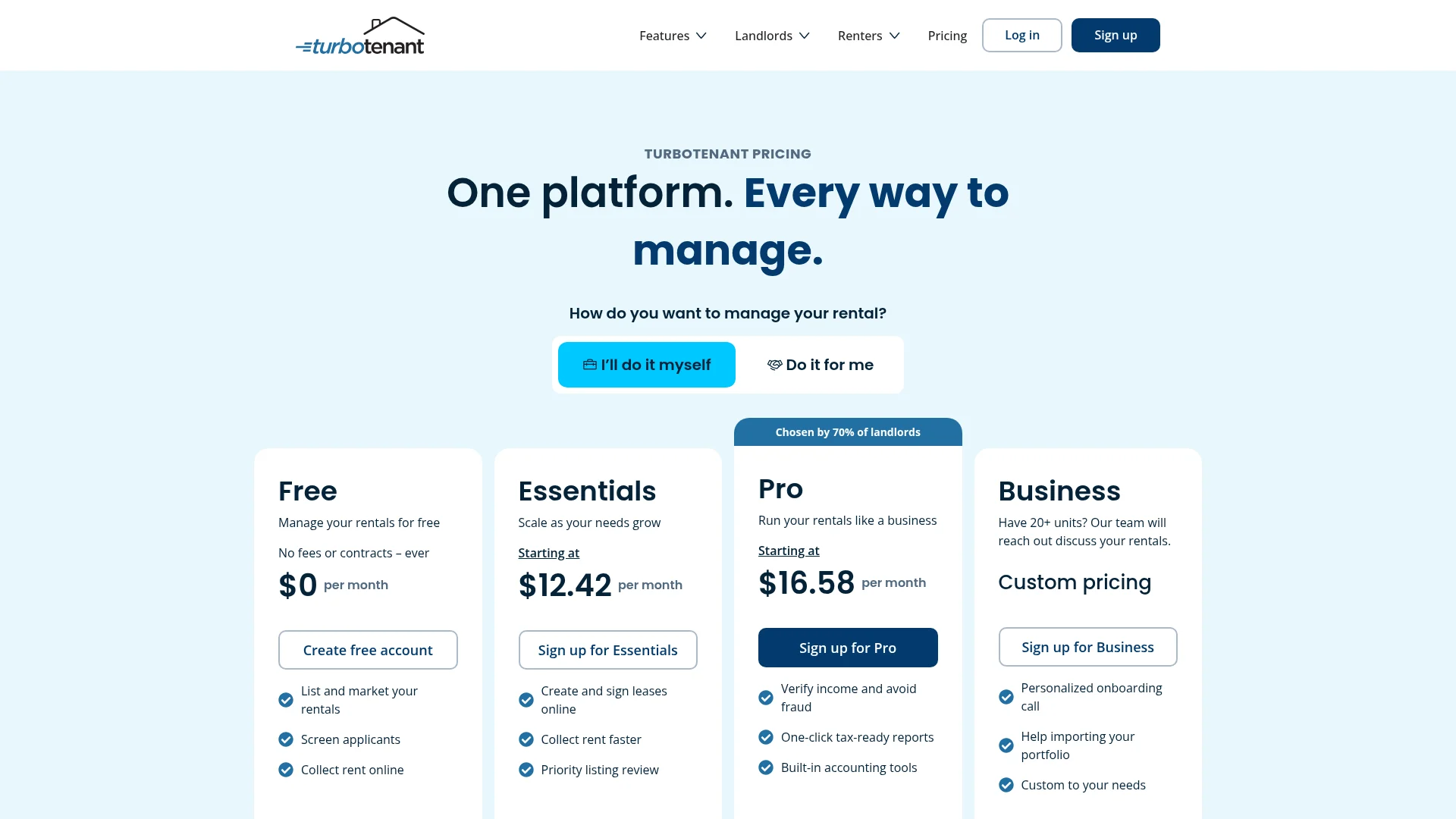
TurboTenant: the switch to a $0 invoice
The free tier includes unlimited units and listings, applications, TransUnion screening, rent collection and maintenance, with the costs pushed to the tenant side: $2 per ACH payment on Free, 3.49% on cards, $55 screening. Paid tiers bill annually only — Essentials $149–$349 a year, Pro $199–$999 across unit bands (entry prices confirmed on turbotenant.com/premium, 10 November 2026; band tops from our TurboTenant review, 3 November 2026). Pro unlocks Schedule E and Form 8825 export and waives the tenant ACH fee. What you give up: real accounting below Pro, and a reported 5–10 day payout on Free.
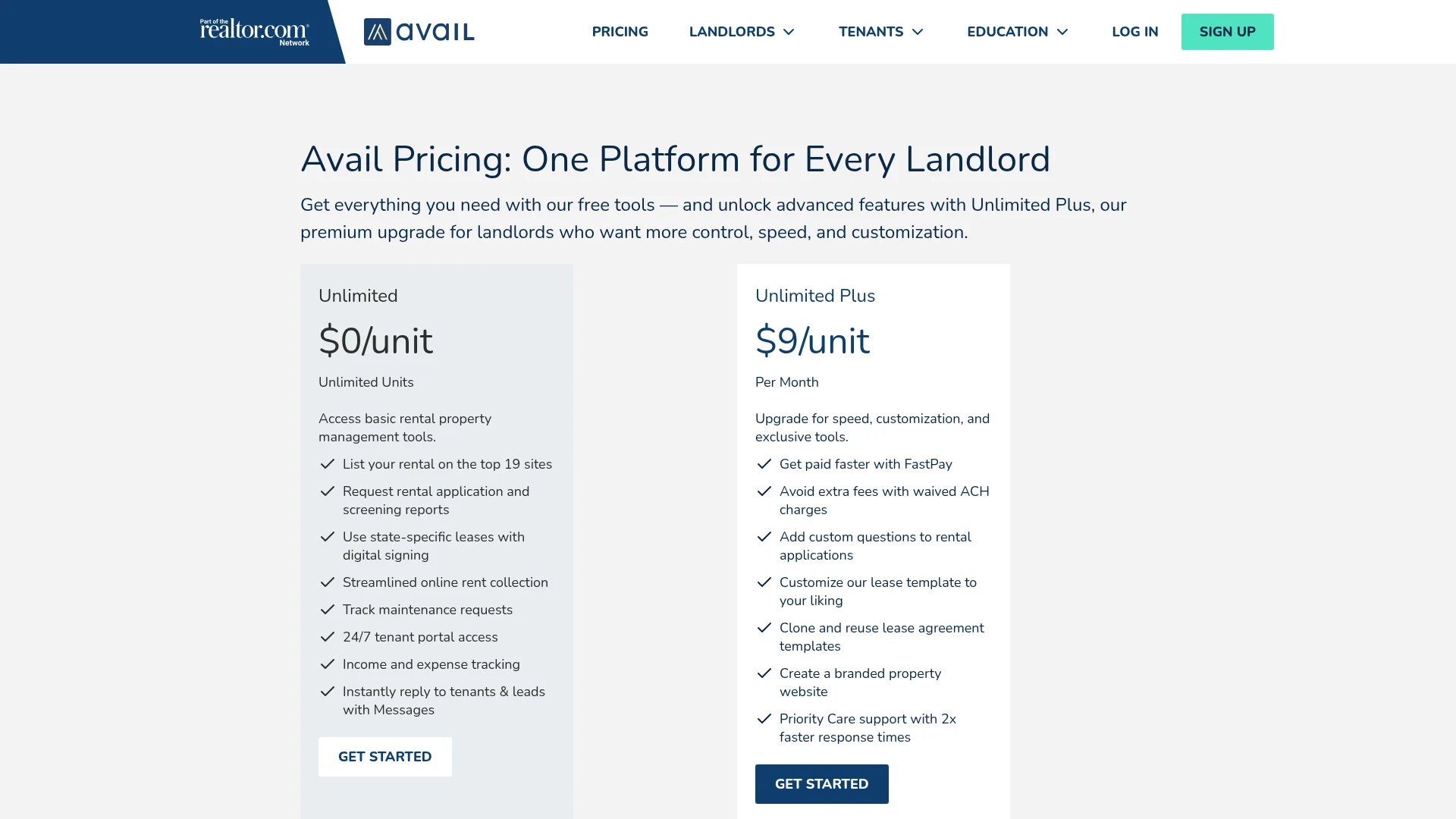
Avail: the switch for free leases and listing reach
Avail, part of Realtor.com Rentals, gives away lawyer-reviewed state leases with e-signing, syndication, TransUnion screening and rent collection at $0 a unit (avail.com/pricing, 10 November 2026). Tenants pay $2.50 per ACH and 3.5% on cards; Unlimited Plus at $9 per unit per month waives the ACH fee and buys next-day FastPay — $1,080 a year at ten units for speed and customization, not capability. What you give up: the thinnest accounting here, and native mobile tooling — Avail’s own comparison page pitches “mobile-responsive online portals” rather than a dedicated app. Our Avail review covers the screening tiers.
Innago: the switch for cheaper tenant-side fees
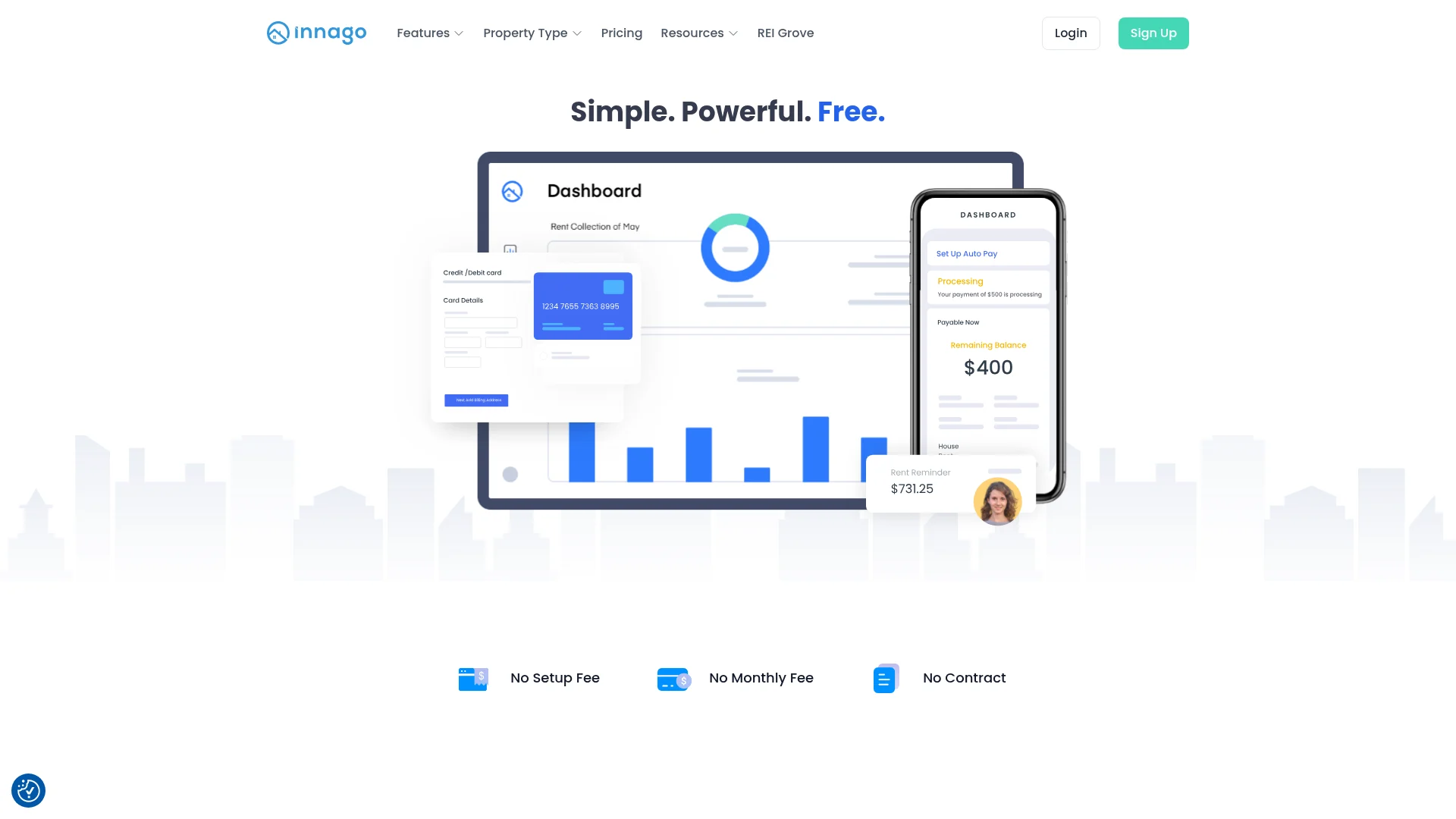
Innago charges the landlord nothing — no subscription, no setup fee, no contract — and bills tenants $2 per ACH or a flat 2.99% on cards ($44.85 on a $1,500 payment), with screening at $30–35 per applicant plus $10 for income verification (our Innago review, 6 November 2026). Against RentRedi the card math wins on the same $1,500: RentRedi grosses its 3.1% up to $48.30, and screening three applicants costs $119.97–$149.97 against $90–105 at Innago. The ACH line loses ($2 versus $1, so $12 more per tenant per year). It also runs a free native app — Innago: Landlord & Tenant App, 4.4 across about 1,000 App Store ratings (10 November 2026). What you give up: payout speed — first payments and new funding sources sit three business days — and reporting depth.
Stessa and Baselane: the banking-first switch
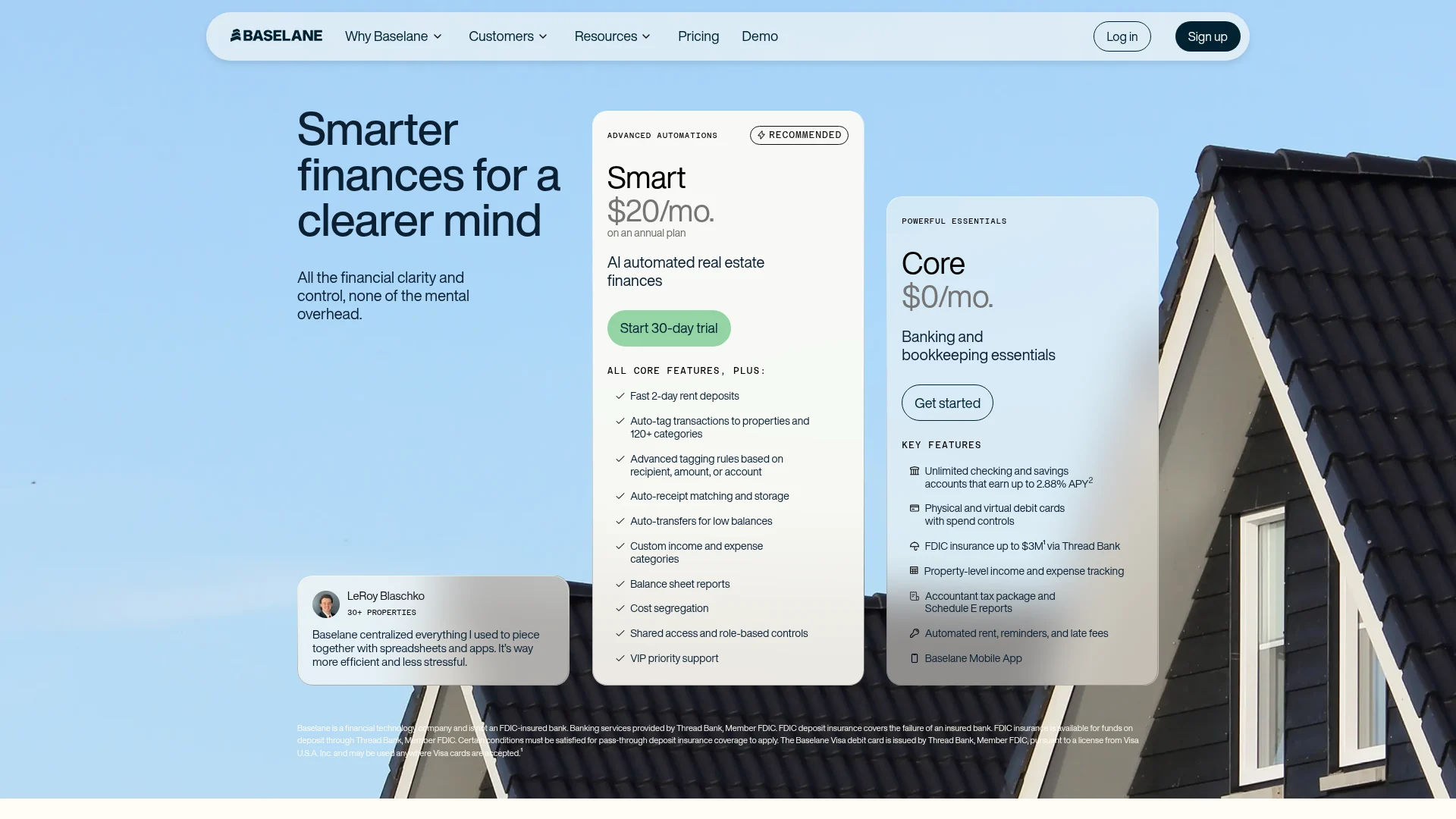
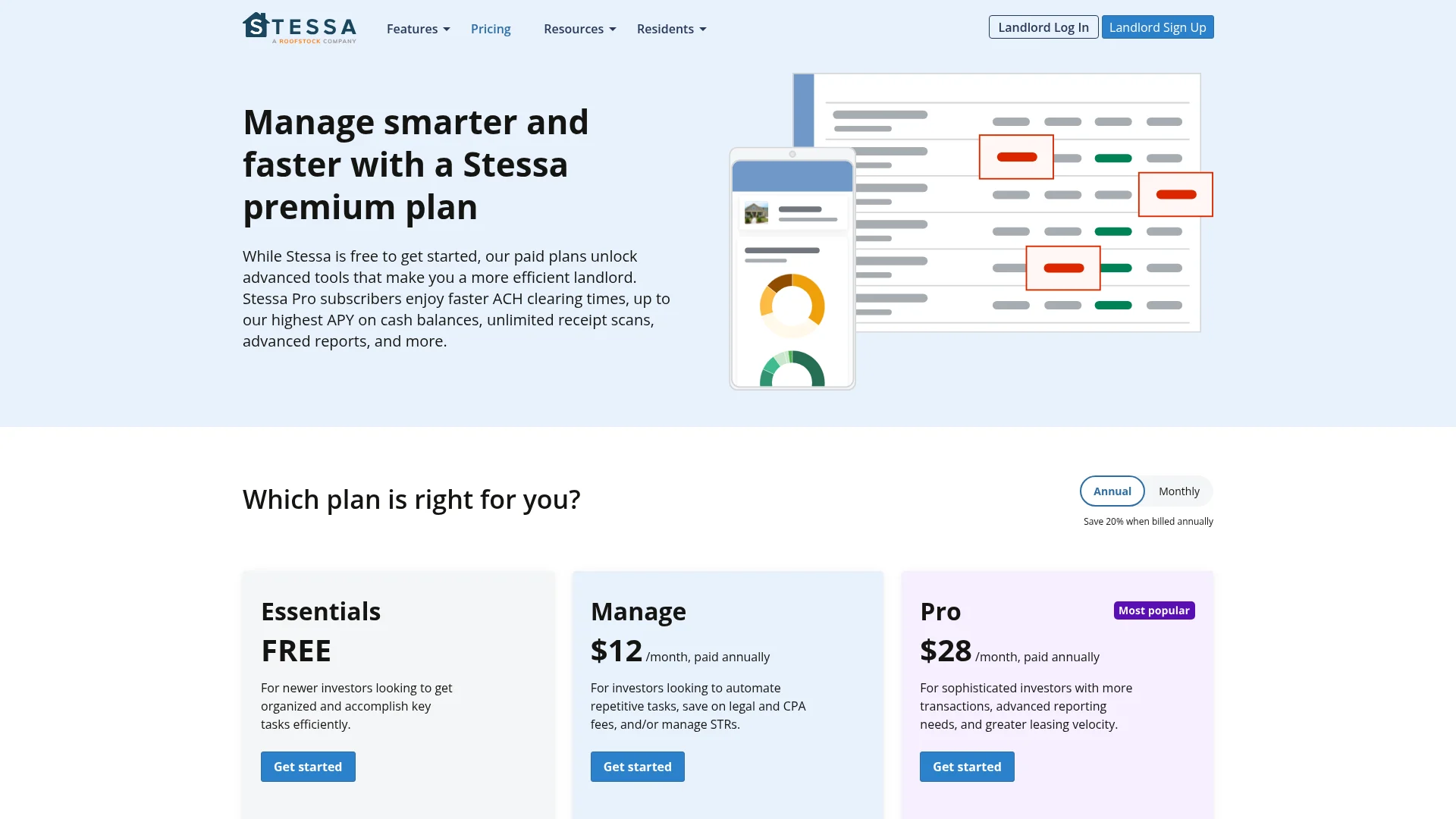
Both do the books for free, Schedule E aside on Stessa. Stessa Essentials is $0 with unlimited properties, bank feeds, free landlord-side rent collection and $15 leases; residents pay nothing to send ACH into a Stessa Cash Management account, $2 per ACH to an external bank and 3% on cards, and landlords never pay either way (support.stessa.com, 10 November 2026). Manage at $12 a month billed annually adds Schedule E; Pro at $28 adds portfolios and budgeting (stessa.com/pricing, 10 November 2026). Baselane Core is $0 with free checking and savings, property-level tracking, Schedule E reports and rent collection; Smart at $20 a month annual cuts deposits to two days and adds AI tagging (baselane.com/pricing, 10 November 2026). Baselane lists tenant ACH at $2–$5, waived for Baselane deposits; cards run 3.49% tenant-paid. What you give up: the front office — neither builds RentRedi’s leasing-and-maintenance workflow.
Rentec Direct: the switch for real accounting
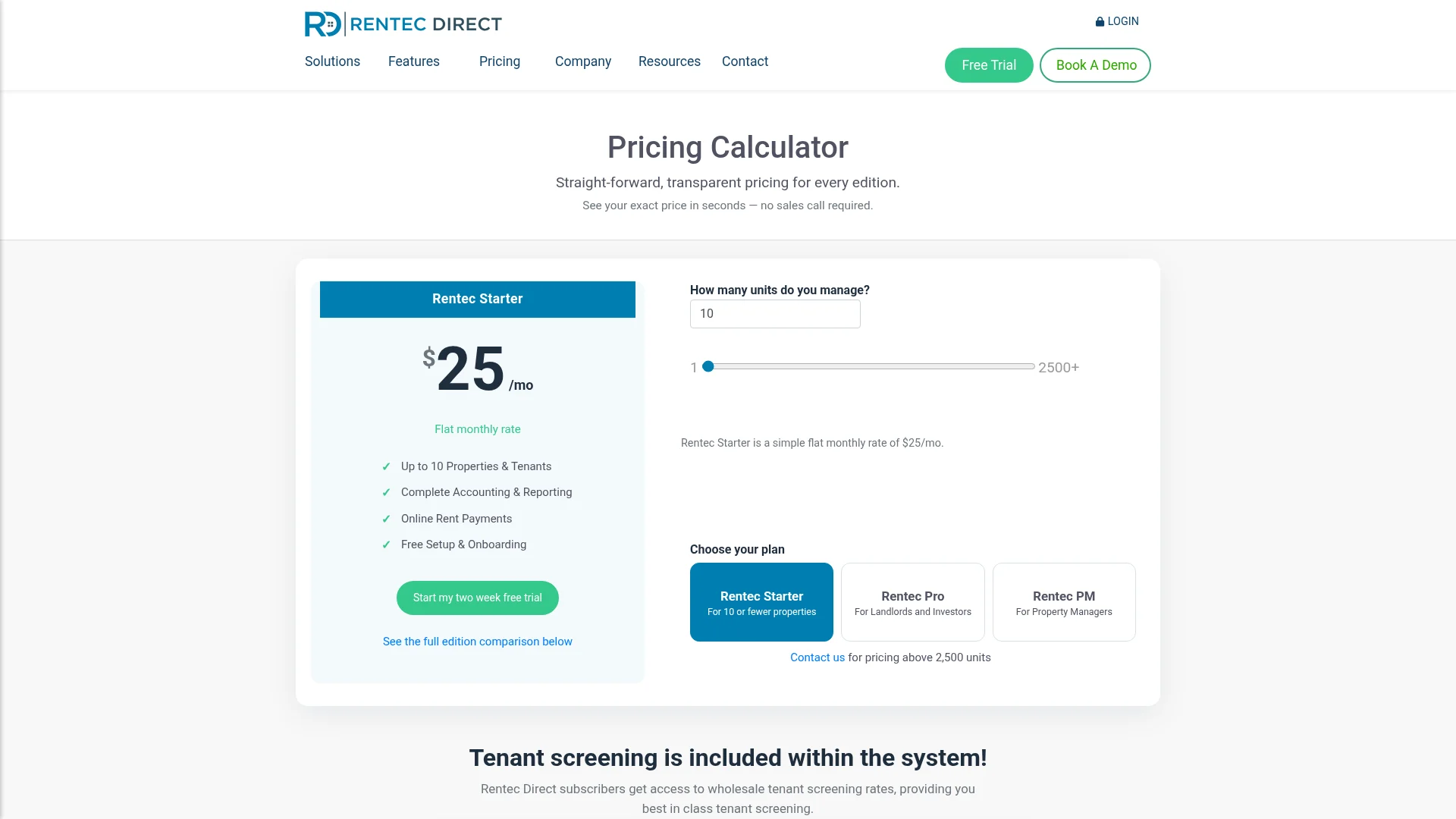
Rentec Starter is $25 flat for up to ten properties with genuine double-entry accounting, online payments and free one-on-one setup (rentecdirect.com/pricing, 10 November 2026). Pro and PM start at $50, at $2 and $2.50 per unit; PM adds trust accounting and an owner portal, while 1099 e-filing is included from Pro. Incoming ACH is $2 on Starter; Pro and PM include one free per active property each month, then $0.50. Cards run 3.50% on Starter, 2.95% on Pro, billable to either side, and screening is $10–$29.45 a report. What you give up: an interface its own users call dated. Choose it when the ledger is why you pay at all — $300 a year against RentRedi’s $144, and the difference is real books.
Buildium: the switch when you scale past 20 units
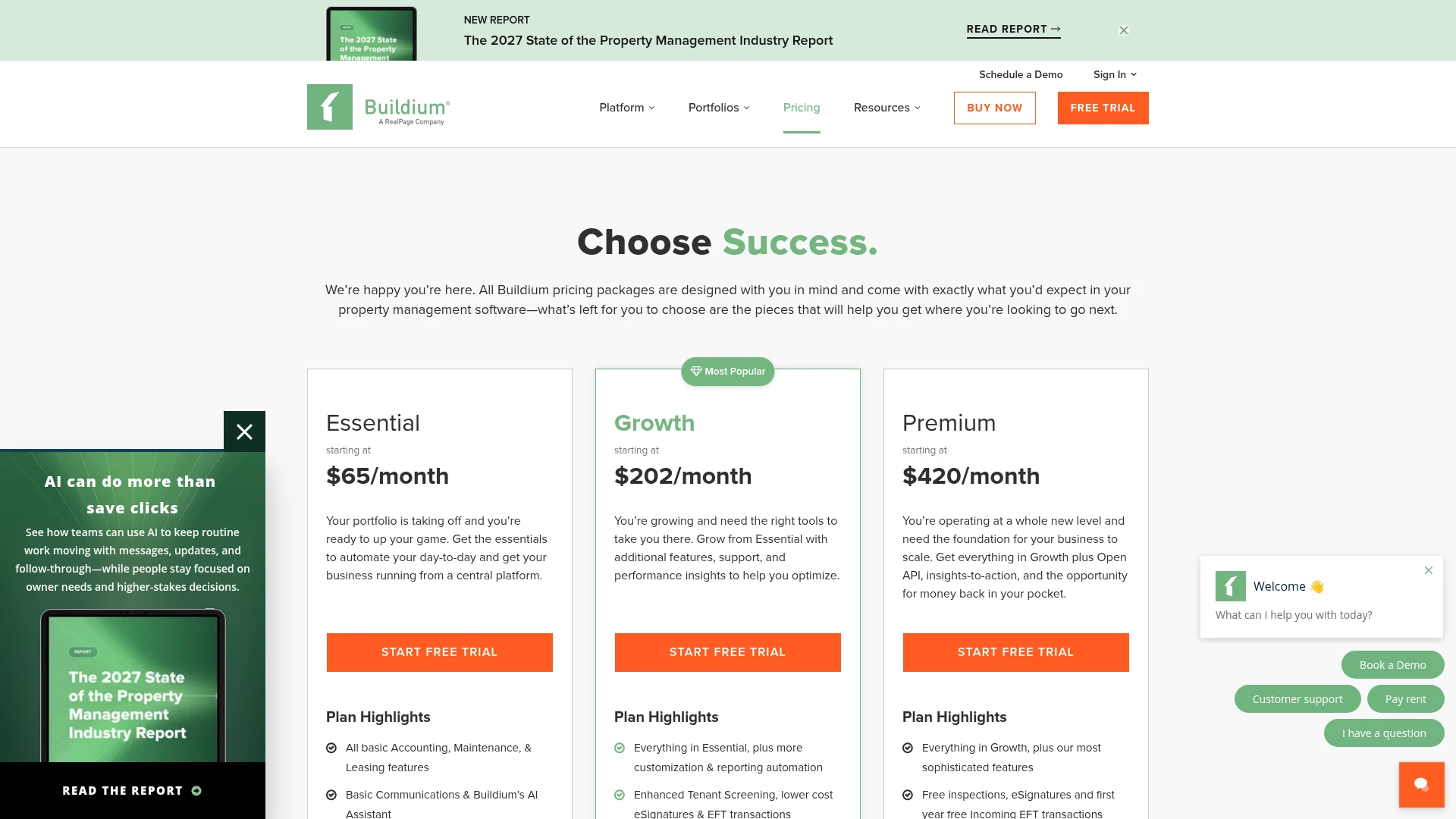
Past roughly 20 units the question stops being “cheaper than RentRedi” and becomes “built for the job.” Buildium Essential runs $65 a month to 20 units and $84 to 40, with a full general ledger, native trust accounting, owner statements and 1099 e-filing on one bill — plus a fee stack ($2.35 per incoming EFT, $5 per e-signature) and Growth at $202 from unit 41 (our Buildium alternatives guide prices every band, 5 November 2026; plan cards read $65 / $202 / $420 on 10 November 2026). Choose it when owner statements or trust accounting are requirements; up to 40 doors it costs five to seven times RentRedi — $780 to $1,008 a year against $144 — for capability you won’t use.
Hemlane: the switch for hands-off maintenance
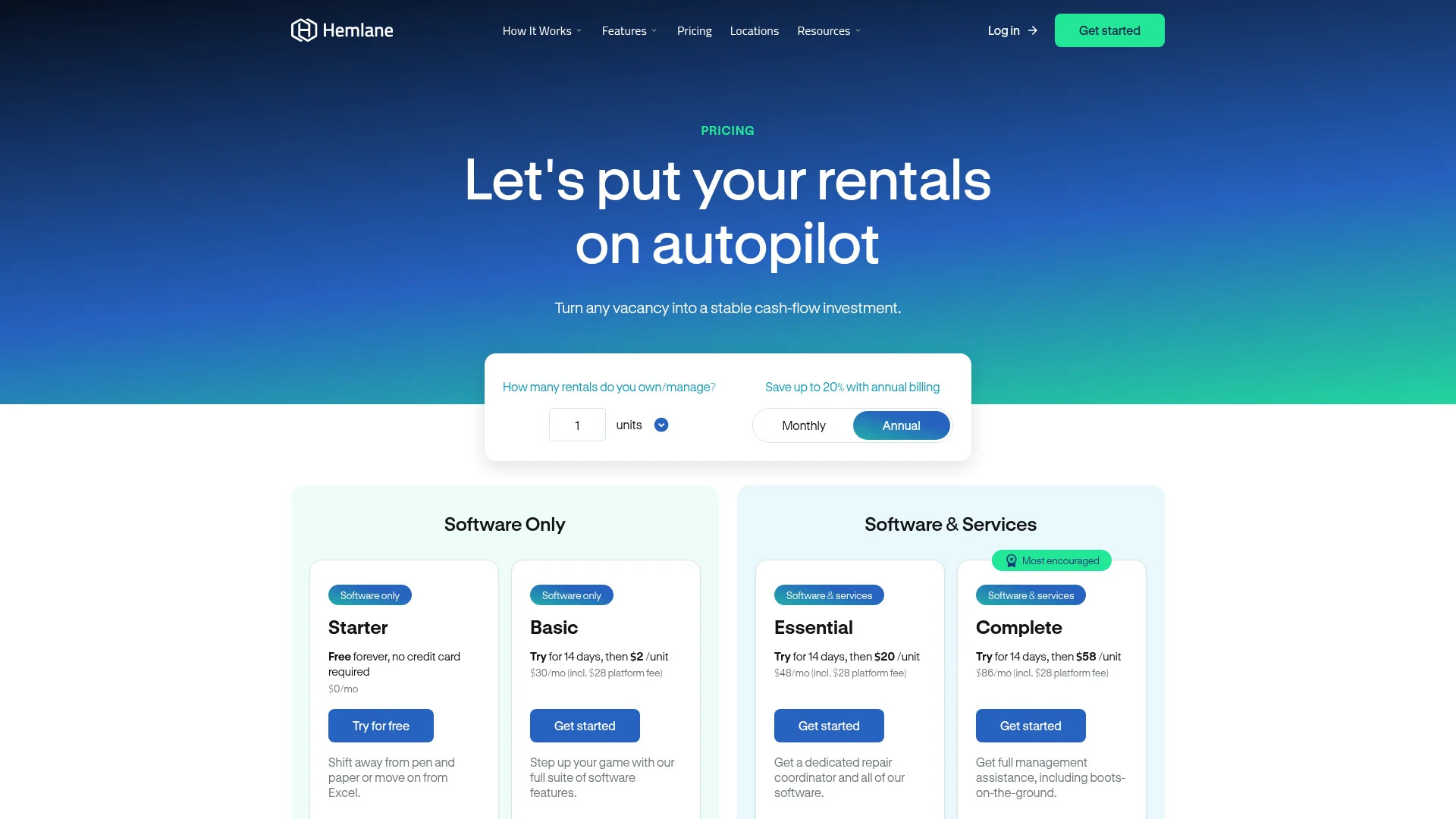
Hemlane lists ACH as free to both sides on every plan that includes payments — the same zero TurboTenant Pro, Avail Unlimited Plus and Rentec Pro and PM reach, though Rentec caps its free transfers at one per property a month. Basic is $28 a month of platform fee plus $2 a unit — $30 at one unit, $52 at twelve — and cards run 3% (hemlane.com/pricing, 10 November 2026). A free-forever Starter tier covers advertising, screening and bank-synced accounting but not rent collection (Hemlane’s help center, 10 November 2026), and the service tiers (Essential $20 a unit, Complete $58) add 24/7 repair coordination — the job RentRedi sells separately through Latchel. Moving five units from RentRedi to Basic costs $456 a year to save five tenants $60 in ACH fees. Choose Hemlane when maintenance coordination is the real problem.
Switching from RentRedi
No platform in this guide imports RentRedi data — plan on manual re-entry. Export your Schedule E summaries and property P&Ls while the account is live (PDF or spreadsheet on every plan, verified 4 November 2026) and keep your own lease PDFs. Run both systems for one rent cycle and switch between cycles, not mid-cycle — a payment landing on the old rails during cutover is the classic migration mess, and Innago holds a first payment three business days, so time the switch away from your mortgage date. RentRedi has no contract (its pricing page, 10 November 2026): leaving costs an evening, not a fee.
FAQ
Is there a truly free alternative to RentRedi?
Yes — five, in two groups. TurboTenant, Innago and Avail are free front-office tools: $0 to the landlord, unlimited units, and tenants paying $2–$2.50 per ACH plus $30–$55 for screening. Baselane Core and Stessa Essentials are also $0, but they lead with the books and run a thinner front office; Baselane’s Core includes Schedule E at that price (verified 3–10 November 2026). What you give up against RentRedi’s $144: leases (TurboTenant’s free tier can draft one but needs Essentials or Pro to finalize or send it for signature; Avail’s are free), Schedule E summaries (Pro-only on TurboTenant, absent on Avail, $12 a month on Stessa), and payout speed.
Is RentRedi worth it?
For a phone-first landlord at ten units or fewer who wants leasing, payments, maintenance and expense-level accounting on one bill — yes. $144 a year with no per-unit fee buys all four in one place and a landlord app with the largest rating base here. It stops being worth it when you need a general ledger, owner statements or trust accounting, none of which exist on any RentRedi plan.
What’s the best RentRedi alternative for 10 units?
By cost, Innago: $0 to the landlord, a $2 tenant ACH that matches TurboTenant Free, and the lowest card fee of any $0 option here (2.99%, against 3–3.5%). By books, Rentec Starter at $25 flat — $300 a year, so it buys the ledger rather than a smaller invoice. Innago is the one that undercuts RentRedi’s $144. Both were checked against vendor pages on 10 November 2026. RentRedi remains the pick if mobile-first operation matters more than either.
Do any alternatives charge tenants less than RentRedi?
On ACH, RentRedi’s $1 is the lowest standard rate, though Rentec Pro and PM charge $0.50 per transfer beyond one free per property each month. Zero is reachable: TurboTenant Pro, Avail Unlimited Plus, Rentec Pro and PM and Hemlane’s paid tiers all list tenant ACH as free to both sides, and Stessa’s is free into a Stessa Cash Management account. The cheapest of those is still a platform decision — Hemlane Basic is $360 a year at one unit, to save one tenant $12. Cards differ more usefully: Innago’s flat 2.99% and $30–35 screening beat RentRedi’s 3.1% plus $0.30 and $39.99–$49.99.
How hard is it to switch off RentRedi?
Manual but short: no competing platform imports RentRedi data, so you re-enter properties and tenants, re-upload lease PDFs and re-verify tenant bank accounts — an evening of setup plus one overlapping rent cycle.
Which alternative has a mobile app as good as RentRedi’s?
On score, TurboTenant’s and Stessa’s, marginally: TurboTenant for Landlords sits at 4.8 across about 12,200 App Store ratings and Stessa at 4.8 across about 5,300, against RentRedi’s 4.8 across about 15,600 (iTunes, 10 November 2026) — RentRedi’s edge is the size of its rating base, not its score. TurboTenant has the strongest free-tier mobile experience: native landlord and tenant apps inside the $0 plan, and Innago ships a free native app too. Avail pitches mobile-responsive portals; Stessa and Baselane’s apps are banking-and-books tools.
The verdict
RentRedi is the incumbent worth beating at $144 flat, so confirm the reason before switching: free software points to TurboTenant, real books to Rentec Direct, tenant-side costs to Innago, banking-first bookkeeping to Stessa or Baselane at $0. Switch between rent cycles, export your reports first, and run your unit count through the cost calculator.