Buildium Alternatives: What to Switch To by Unit Count (2026)
The right Buildium alternative depends on why you're leaving: DoorLoop past 40 doors, Rentec on $25, TurboTenant free, AppFolio above 50. Verified Nov 2026.

Leaving Buildium is a size decision before it is a software decision. Below 41 units the usual reason is the fee stack — $2.35 per bank payment, $5 e-signatures, $99 per bank account — and the fix is Rentec Direct at $25 flat, TenantCloud on its $180 annual Starter plan, or a free tier like TurboTenant. At unit 41 the math itself pushes you out: Growth jumps to $202, and DoorLoop’s $199 monthly minimum undercuts Buildium from there up. Above 50 units, AppFolio will quote you a bundle built for management companies. Pricing was checked against vendor pages on 5 November 2026; where a live page did not expose a calculator or fee detail, the relevant source and its access date are identified below.
Disclosure: Landlord Method doesn’t earn a commission from any platform in this guide — none of these affiliate programs is live on this site. Prices and fees below come from the vendors’ own pages on the dates noted; review scores and forum quotes are attributed to Capterra, Trustpilot and Reddit in the sections that use them. Where a number comes from a reported invoice rather than a published price, we say so.
Quick answer: the field at a glance
| Pricing model / minimum (source dates per row) | Key fees | Accounting depth | Best fit | Main tradeoff | Switching note | |
|---|---|---|---|---|---|---|
| Buildium (incumbent) | Banded: Essential $65/mo to 20 units, $84 to 40; Growth $202 from 41 (5 Nov 2026) | Incoming EFT $2.35/$1.35, eSignature $5/$1, $99 per bank account on Essential | Full general ledger, native trust accounting, owner statements, 1099 e-filing | 20–40 units with real books to keep | Onboarding mandatory and unpriced at Growth and above | Export your reports before deciding; plan changes are self-serve |
| DoorLoop | Per unit: $2.50/mo, $199 monthly minimum on annual billing; $1.50/unit above 100 (5 Nov 2026) | One ACH $1.50 tenant-paid, cards 3.25% with a $3.50 minimum (fee details: DoorLoop help center, 4 Nov 2026) | Property reports on expense categories; trust accounting documented | 50–150 units | Below 80 units you pay the floor, not the rate | Cancellation is not self-service — export first |
| Rentec Direct | Starter $25 flat to 10 properties; Pro $2/unit, $50 minimum; PM $2.50/unit (plan prices 5 Nov; per-unit rates from the site calculator, 2 Nov 2026) | Starter incoming ACH $2.00; Pro/PM one free per property per month, then $0.50 | Double-entry books; PM adds trust accounting and owner ACH | 1–25 units; PM on price up to 100 | Dated interface | Free setup and onboarding on every plan |
| TenantCloud | Lease-based: Starter $180/yr ($15/mo equivalent; 10 leases), Growth $350/yr (30 leases), Pro $600/yr (60 leases); Business from $100/mo (5 Nov 2026) | ACH $1.50–$1.95 tenant-paid; screening $39 plus $10 income | Basic until Pro, which adds reconciliation, tax reports, owner portal | Multi-unit buildings at 10 leases or fewer | Caps count leases, not units; monthly Starter rate varies between reads | 14-day trial; migration help depends on plan, unpriced |
| TurboTenant | $0 free, unlimited units; paid tiers annual-only from $149/yr (5 Nov 2026; unit bands 3 Nov 2026) | Tenant pays: $2 ACH on Free, 3.49% cards, $55 screening | No tax-report exports below Pro ($199/yr for 1–10 units; banded above) | 1–10 units, vacancy-driven | Reported 5–10 day payouts on Free | No contract; upgrades happen in place |
| Avail | $0/unit free; Unlimited Plus $9/unit/mo (5 Nov 2026) | Tenant pays $2.50 ACH on Free (waived on Plus); 3.5% cards | Thinnest accounting of the set | 1–10 units, leasing-focused | Depth of the books | Owned by Realtor.com Rentals |
| Innago | $0 to the landlord, unlimited units (5 Nov 2026) | Tenant pays $2 ACH, 2.99% cards, $30–35 screening (amounts from Innago’s payments and screening pages, 2 Nov 2026) | Expense-level reporting | 1–25 units, cost-driven | Tenants are the revenue model | No setup fee, no contract |
| AppFolio | Per unit, 50-unit minimum; minimum spend unpublished (reported $280–$298/mo) (5 Nov 2026) | Resident eCheck $2.49; cards 2.99% | Full ledger, trust accounting, 1099s | 100+ unit managers | Nothing is priced in public | Onboarding reported around $400 and up |
Why landlords leave Buildium — and when they should stay
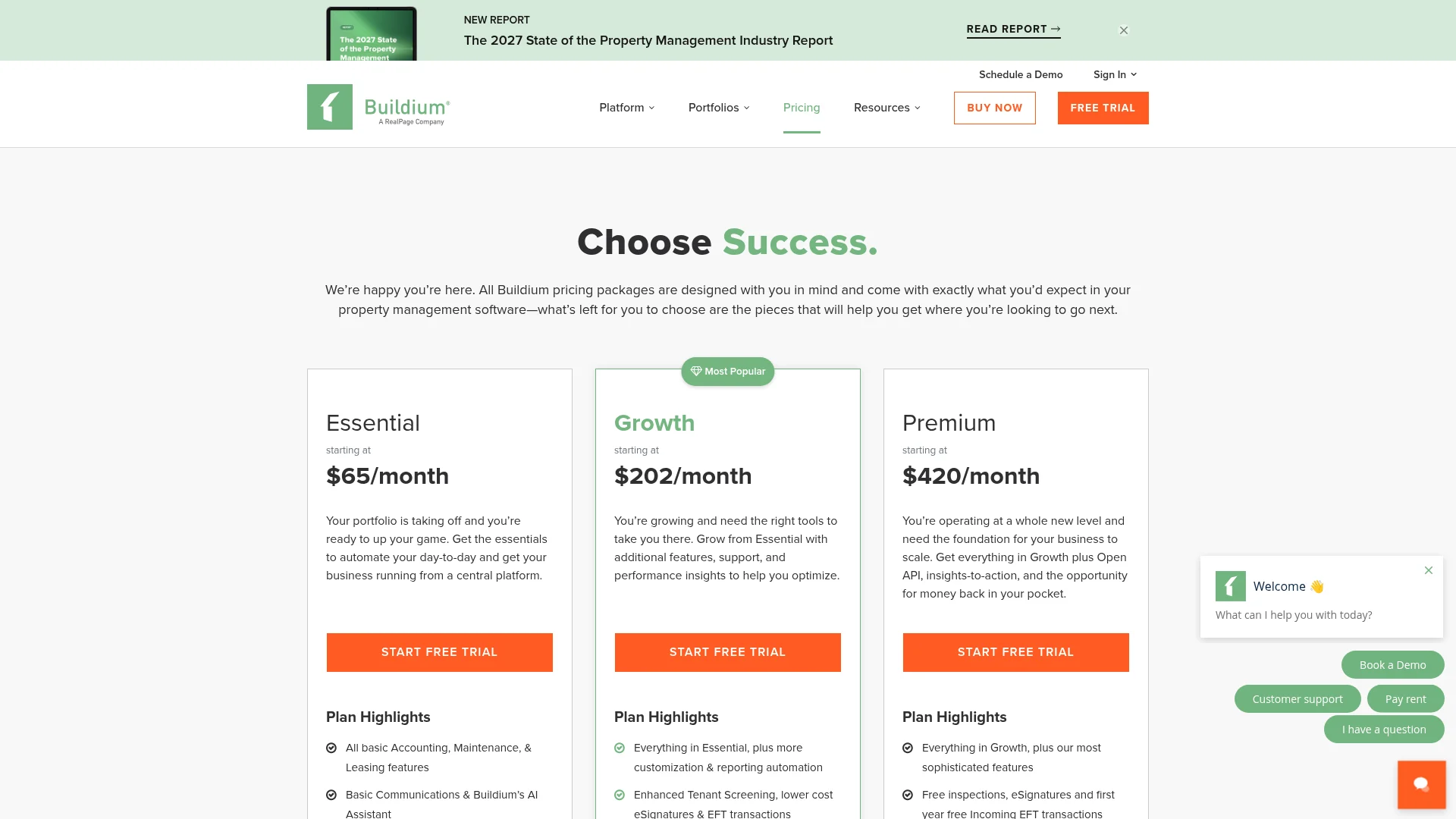
The fee stack is the most-cited reason. Buildium charges the landlord by default for incoming bank payments — $2.35 on Essential, $1.35 on Growth — plus $0.99 per outgoing EFT, $5 per eSignature document on Essential, $99 per business bank account on Essential, and inspections at a $99 setup plus $40–$95 a month on Essential (Buildium’s pricing page, 5 November 2026). None of it is hidden; it just isn’t in the headline. List prices also rose about 5% on 29 October 2026, so older comparison pages quote numbers that no longer exist.
The second reason is the cliff. Essential stops at 40 units, so unit 41 moves you from $84 to Growth at $202 — a 140% jump for one door — and Growth and Premium customers must buy onboarding at a price Buildium doesn’t publish. Phone support starts at Growth; Essential gets tickets. And the learning curve is real: “it’s clunky but it works for us and you get used to the clunky-ness,” as one r/PropertyManagement landlord put it.
Stay if any of these describe you. You need trust accounting, owner statements or 1099 e-filing — no alternative under $100 a month matches Buildium’s books except Rentec PM at scale. You sit at 21–40 units on Essential: $84 buys a full general ledger with native trust accounting, owner statements and 1099 e-filing on one bill. Rentec Pro undercuts it on price in this band ($50–$80), so the honest case for staying is the ecosystem depth, not the bill. You’re already trained on it — switching costs money and a month of your evenings, and our Buildium review covers the full fee stack and unit math that decision deserves.
What the switch actually costs at 5, 10, 20, 50 and 100 units
Assumptions: one landlord-paid ACH rent payment per unit per month; monthly billing except where marked annual. TenantCloud uses its annual-billed plan prices ($180/$350/$600 for Starter/Growth/Pro); the pricing page’s month-to-month Starter display varied between reads on 5 November, so confirm the monthly amount at checkout — the table sticks to the annual figures. Payment fees shown on the landlord’s side unless marked tenant-paid. Subscription plus the stated rent-payment fee only; screening, leases and add-ons are priced in each section below.
| Units | Buildium (sub + EFT) | DoorLoop One (annual) | Rentec | TenantCloud (annual until 60 leases) | TurboTenant | Avail | Innago |
|---|---|---|---|---|---|---|---|
| 5 | $76.75 ($921/yr) | $199 ($2,388/yr) | $35 ($420/yr) | $180/yr ($15/mo equivalent) | $0 | $0 (Plus $45) | $0 |
| 10 | $88.50 ($1,062) | $199 ($2,388) | $45 ($540) | $180/yr ($15/mo equivalent) | $0 | $0 (Plus $90) | $0 |
| 20 | $112 ($1,344) | $199 ($2,388) | $50 ($600) | $350/yr ($29.17/mo equivalent) | $0 | $0 (Plus $180) | $0 |
| 50 | $269.50 ($3,234) | $199 ($2,388) | $100 ($1,200) | $600/yr ($50/mo equivalent) | $0 | $0 (Plus $450) | $0 |
| 100 | $400 ($4,800) | $250 ($3,000) | $200 ($2,400) | from $100/mo (annual quote unavailable) | $0 | $0 (Plus $900) | $0 |
Three readings of the table. Buildium’s payment fees are the landlord’s by default — shift the incoming EFT to tenants, a configuration choice Buildium offers, and the subscription alone is $65 to 20 units. DoorLoop’s One floor is $199/month on annual billing; its live pricing page checked 5 November 2026 shows $2.50/unit through 100 and $1.50 for each unit above 100. One’s payment fee details were checked in DoorLoop’s payment documentation on 4 November 2026; ACH is tenant-paid. The $0 column is real but not free — TurboTenant, Avail and Innago charge tenants $2–$2.50 per bank payment and applicants $30–$55 to be screened; absorbing Innago’s $2 yourself costs $24 per door per year. Rentec Starter rows include $2 per landlord-paid incoming ACH; Pro includes one free incoming ACH per active property each month, then $0.50, per Rentec’s pricing page read 5 November 2026. TenantCloud’s annual prices are $180 Starter, $350 Growth and $600 Pro; Starter’s month-to-month figure is inconsistent across same-day reads, so the table uses the confirmed annual amount. AppFolio doesn’t appear below 50 units because it won’t sell to you.
DoorLoop: the switch for price above 40 doors
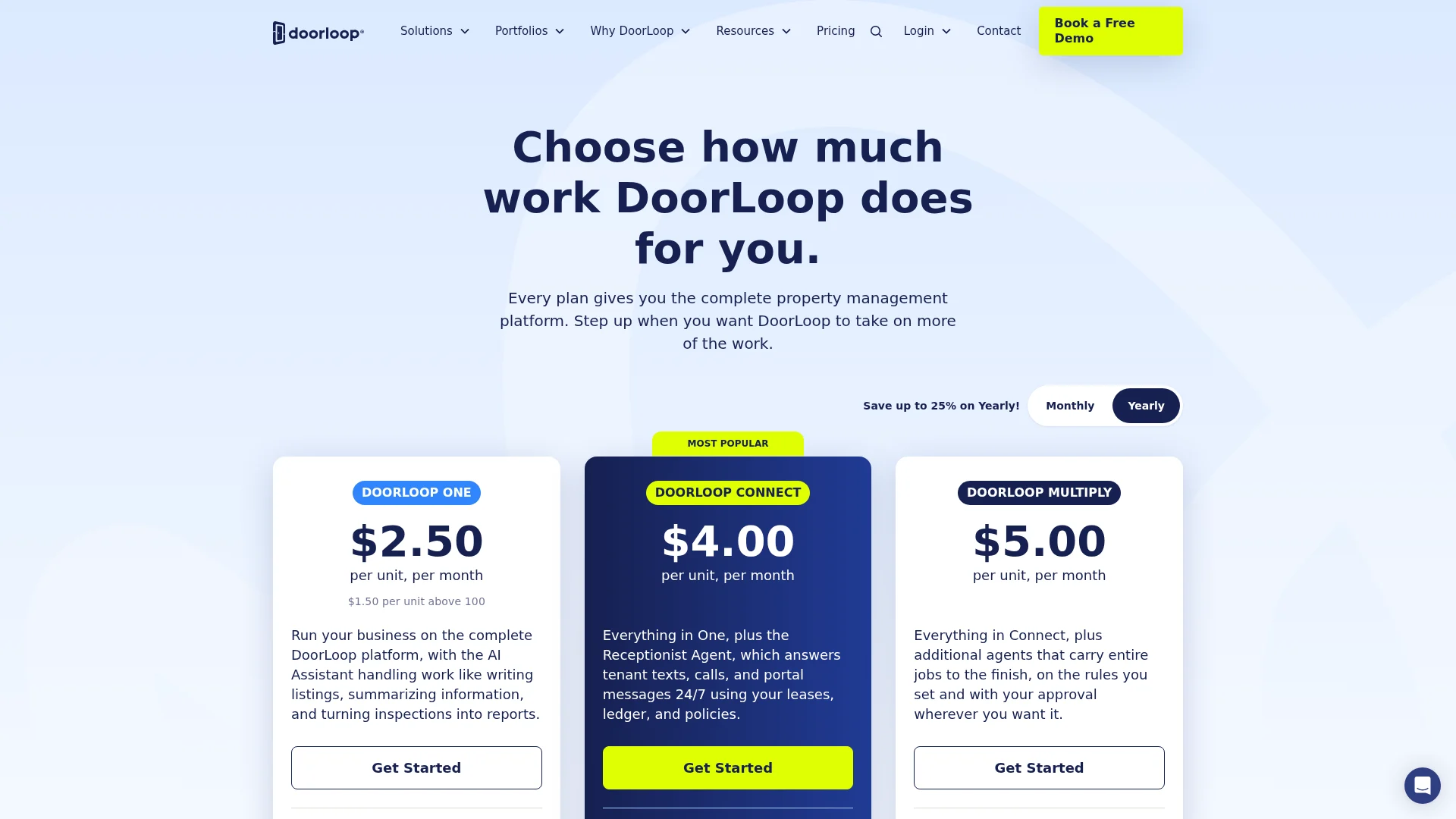
DoorLoop’s annual One price starts at $2.50/unit with a $199 monthly minimum, and the live pricing page shows $1.50 for each unit above 100 (checked 5 November 2026). The static page doesn’t publish a month-to-month rate in this read, so we don’t repeat one. Below 80 units you pay the floor, not the rate — from 41 units it undercuts Buildium’s Growth plan and keeps undercutting it: $199 against $269.50 at 50 doors, $250 against $400 at 100. At 250 units, One is $475/month: $250 for the first 100 units plus $225 for the next 150 at the $1.50 rate. Every plan carries the complete platform — accounting with trust accounting, leasing, maintenance, portals, unlimited users, API — more than Buildium’s entry tier bundles.
What you give up: a portfolio price for a small portfolio below 80 units, support at 3.7 out of 5 across 277 Trustpilot reviews (4 November 2026) against Buildium’s 4.3, and cancellation that runs through a chatbot and a form rather than a settings page — our DoorLoop vs Buildium breakdown prices both invoices at your unit count. Choose DoorLoop if the 41-unit cliff or the fee stack is driving you out and you have 40+ doors. Skip it under 30: the DoorLoop review shows the same floor costing $39.80 a door at five units.
Rentec Direct: the switch for cheaper accounting
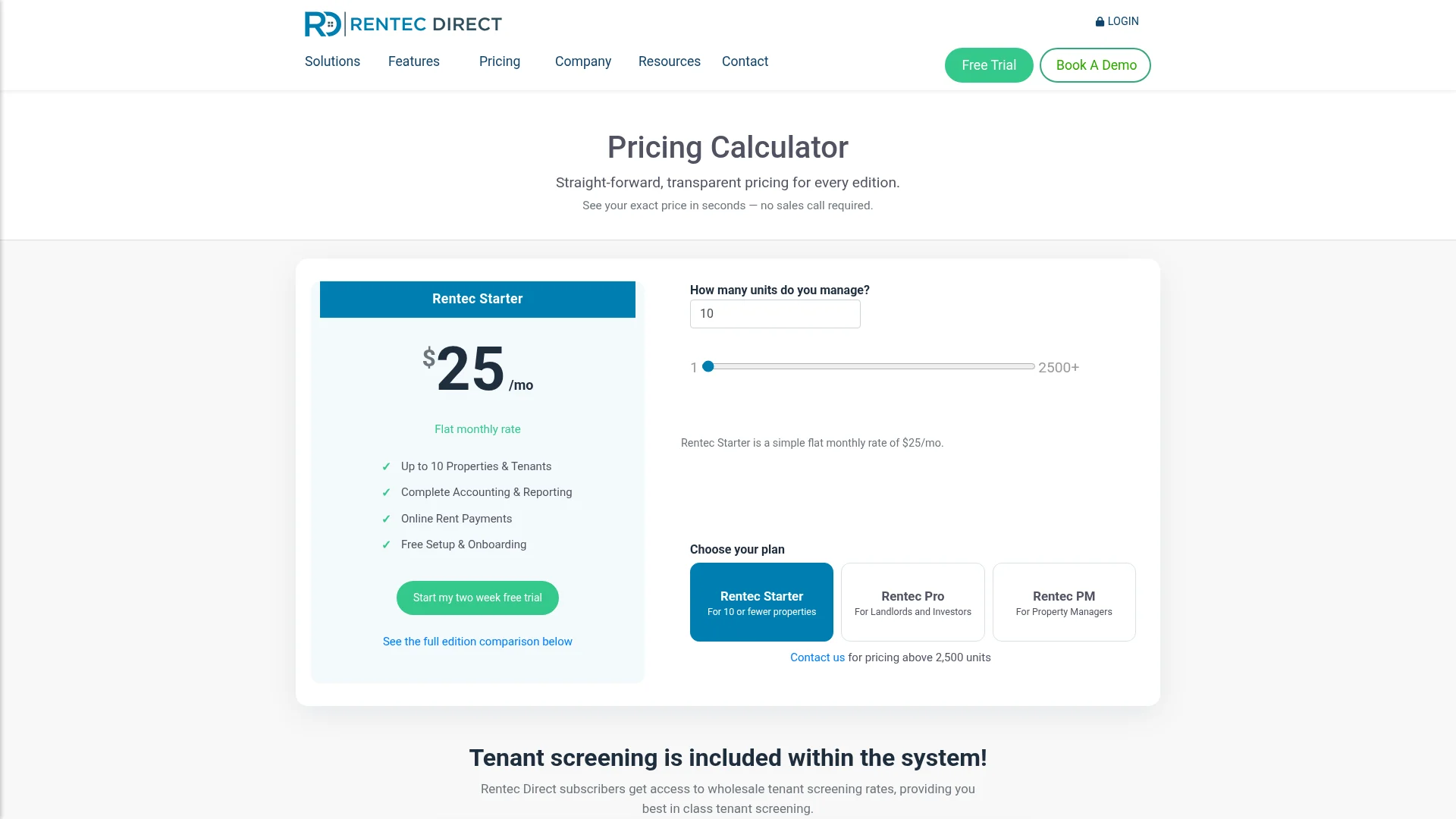
Rentec is the least fashionable name in the category and often the rightest. Starter is $25 flat for up to 10 properties with complete double-entry accounting, online payments and free setup and onboarding. Pro and PM both start at $50 a month on the live pricing card; the per-unit rates — Pro $2, PM $2.50 — came from the site’s calculator read on 2 November 2026, and today’s page prices exact counts through its calculator only. PM adds trust accounting, owner ACH and marketing/maintenance managers (rentecdirect.com/pricing, checked 5 November 2026). Annual billing takes 10% off per the same 2 November read; today’s markup shows the monthly/annual toggle but not the discount. Screening is the cheapest here — $10–$18 per report on Pro.
At 50 units Rentec PM is $125 a month against Buildium Growth’s $202 plus $67.50 in payment fees, and onboarding is free instead of mandatory and unpriced. What you give up: an interface that looks a decade older than it is. If the dated dashboard is the part you’d rather not live with, Landlord Studio puts the same accounting workflow on a phone at a comparable bill. Choose Rentec if accounting is why you pay for software at all and you’d rather keep $75+ a month than look at a modern dashboard. Skip it if you need the owner-portal polish tenants and owners now expect; the small-landlord software comparison prices Rentec against the field at your unit count.
TenantCloud: the switch for the smallest bill
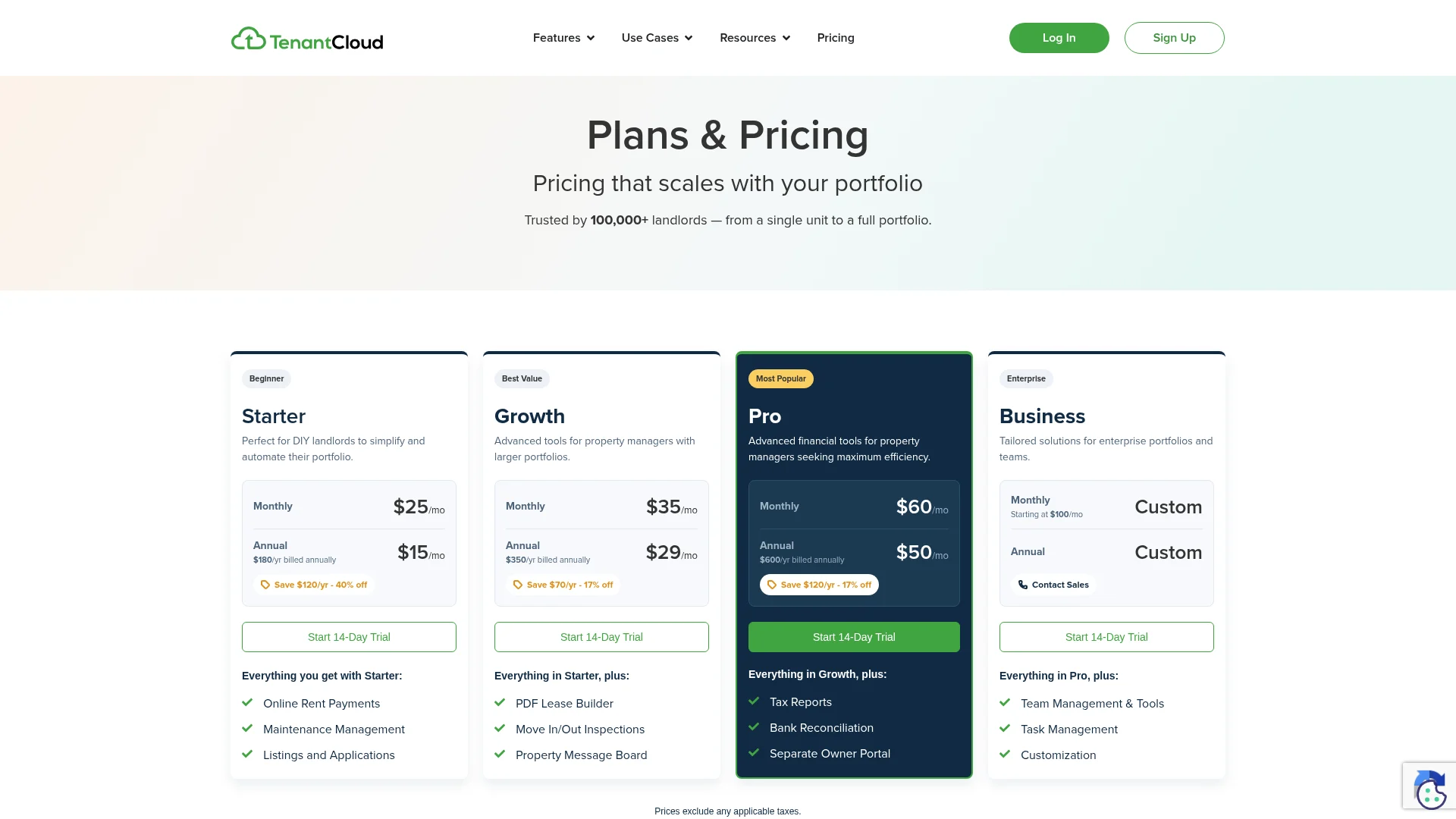
TenantCloud measures in leases, not units: Starter is $180 a year ($15 a month equivalent) capped at 10 leases, Growth $350 (30 leases), Pro $600 (60 leases, adding tax reports, bank reconciliation and an owner portal), Business from $100 a month (TenantCloud’s pricing page, checked 5 November 2026). The annual totals are stable across reads; the month-to-month Starter figure varied between same-day reads of the page ($25 in one read, $18 in another), so don’t use a monthly quote without confirming at checkout. Properties and units are unlimited on every plan, so a fourplex on one lease costs one lease. Tenants pay the payment fees — $1.50–$1.95 per ACH — and screening is $39 plus $10 for income verification, billable to either side.
What you give up: books depth until Pro, and a cap with a different label — twelve single-family rentals break Starter while a twelve-unit building doesn’t. Our TenantCloud review covers the caps and the payment-complaint cluster. Choose TenantCloud if you run multi-unit buildings on a tight budget and can live with Starter accounting until you reach Pro. Skip it if you’re a single-family landlord at 11+ doors — the cap arrives fast.
TurboTenant: the switch to a $0 invoice
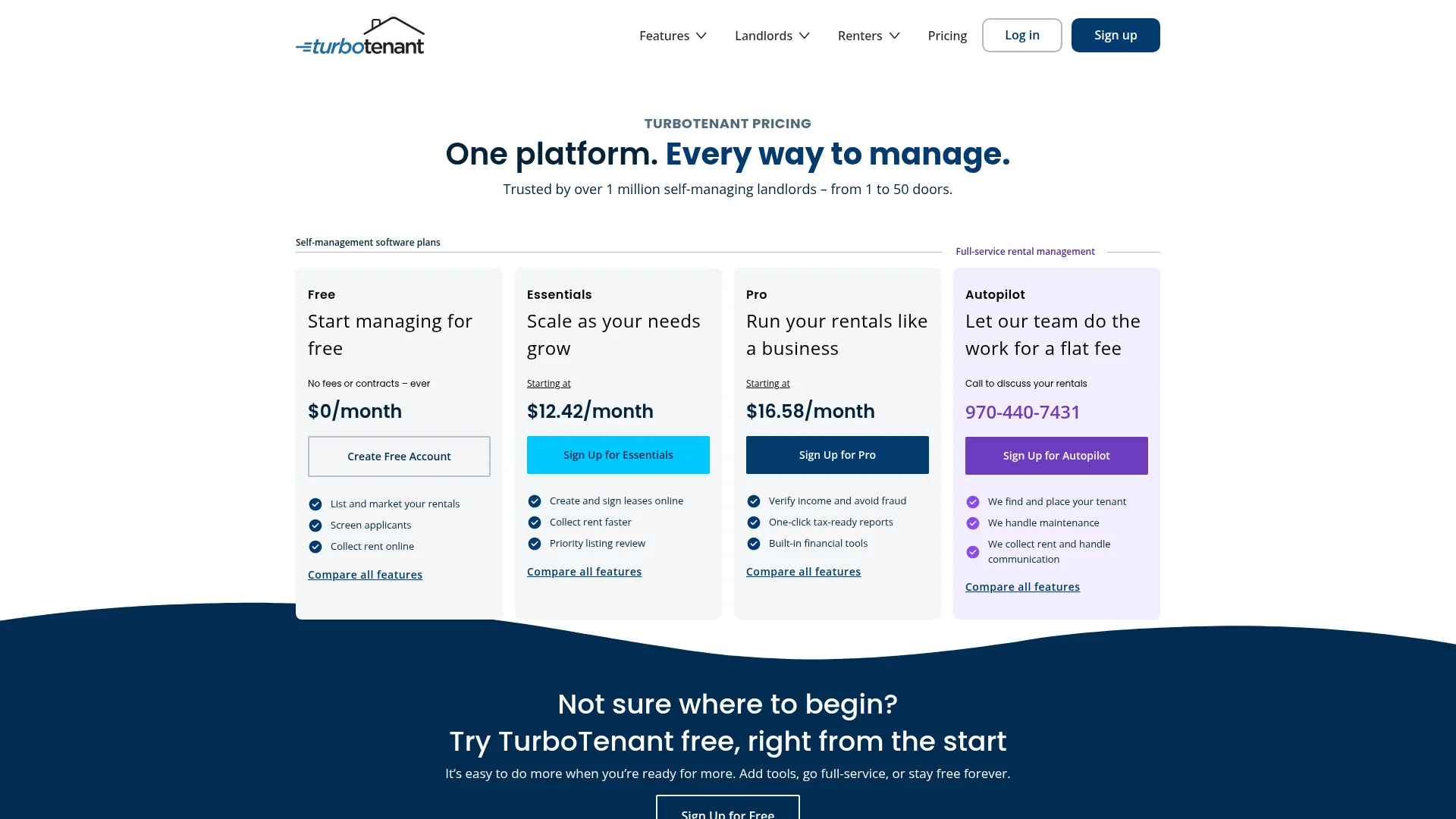
If Buildium’s bill is what you’re fleeing, TurboTenant’s free tier is the strongest $0 in the category: unlimited units and listings, syndication, applications, TransUnion screening (the applicant pays $55 on Free), a state-specific lease you can draft and save but not finalize or send until you pay for Essentials from $149 a year — TurboTenant “does not offer a one-time purchase for individual lease agreements” (help center, 10 November 2026) — and rent collection (turbotenant.com/pricing, 5 November 2026). The catch is structural: your tenants pay $2 per bank transfer and 3.49% on cards, and payouts on Free run a reported 5–10 business days.
The upgrade path is the honest version of “free”: Pro costs $199 a year for 1–10 units, $399 for 11–30, and $699 for 31–60 (the pricing bands listed in our TurboTenant review, checked against the then-current pricing details on 3 November 2026; today’s rendered pricing page displays entry prices but not band tops). Pro unlocks Schedule E and Form 8825 export, waives the tenant ACH fee, and buys phone support. What you give up: real accounting below Pro, and payout speed. Choose TurboTenant if you’re leaving Buildium because you were paying for books you weren’t reading — the TurboTenant review shows where free breaks. Skip it if an owner or a CPA expects statements monthly.
Avail: the switch for free leases and listing reach
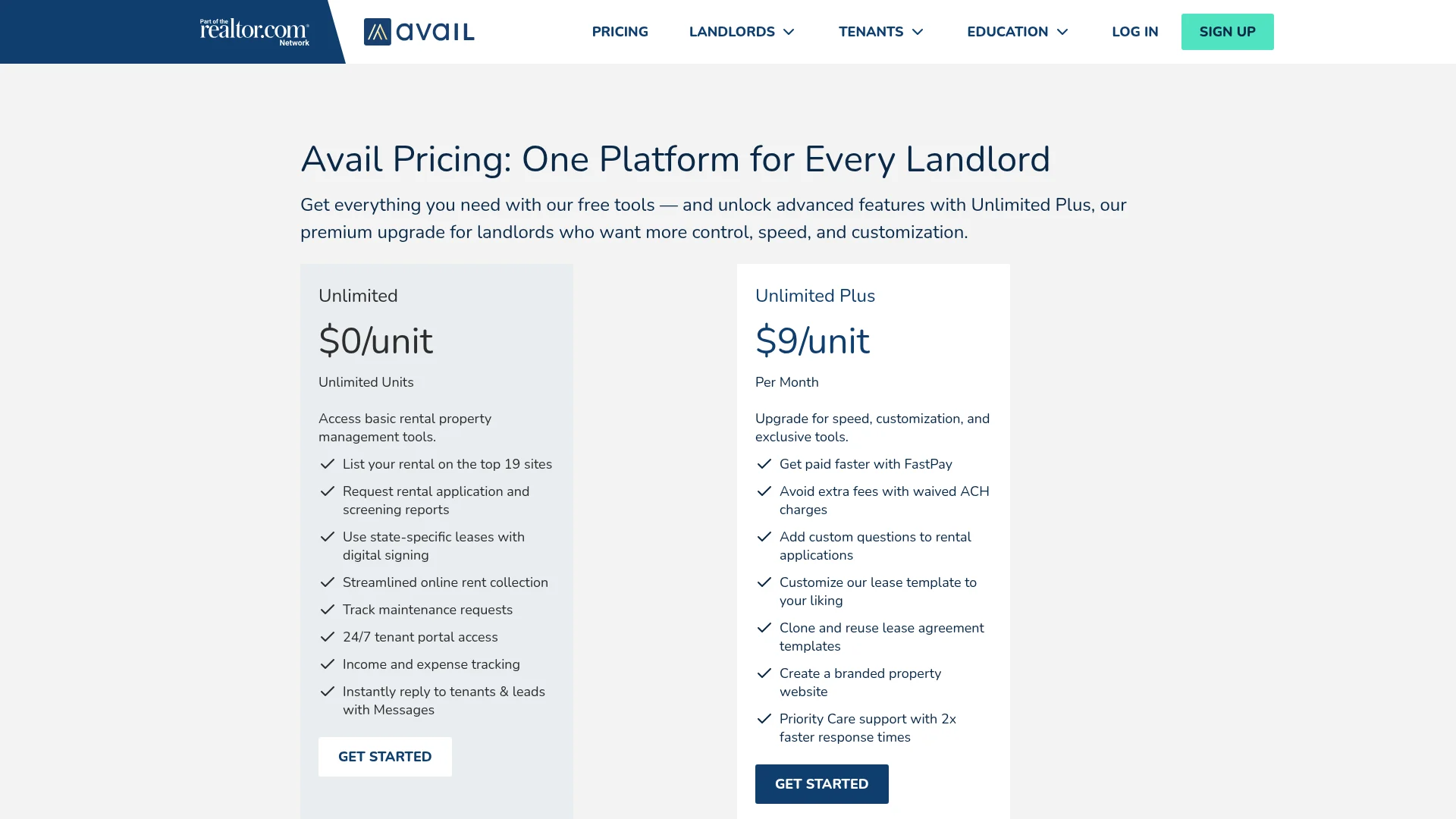
Avail, part of Realtor.com Rentals, gives away lawyer-reviewed state-specific leases, syndication, screening and a clean tenant portal at $0 a unit, unlimited. Tenants pay $2.50 per bank transfer on the free tier and 3.5% on cards; Unlimited Plus at $9 per unit per month waives the ACH fee and adds FastPay (https://www.avail.com/pricing, 5 November 2026). What you give up: accounting — Avail is the thinnest of the seven on the books, and its direction since the acquisition runs toward listing exposure rather than bookkeeping. Our Avail review details the screening tiers. Choose Avail if your switching reason is leasing workflow and your CPA gets a spreadsheet anyway. Skip it if trust accounting or owner statements are on your requirements list.
Innago: the free one with the cheapest tenant-side costs
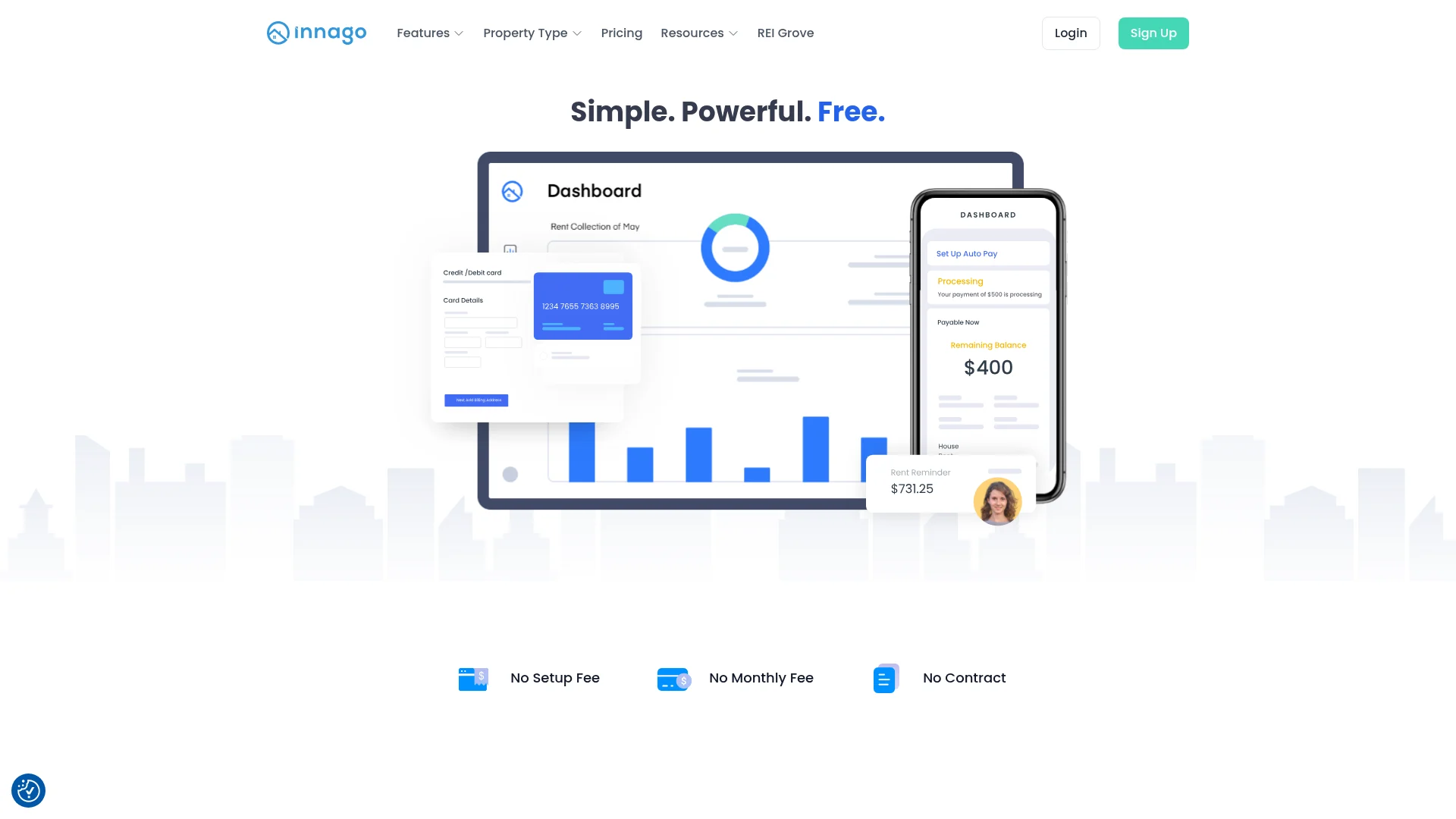
Innago charges landlords nothing — no subscription, no setup fee, no contract (https://innago.com/pricing/ and https://innago.com/online-rent-payments/, read 5 November 2026) — and funds itself off tenants: $2 per ACH payment, 2.99% on cards, and $30–$35 per screening report. Those amounts come from Innago’s own payments and screening pages read 2 November 2026; the pages as served today describe the eCheck and card options but don’t publish the amounts in their static markup. That screening price undercuts TurboTenant’s $55 by $20–$25 per applicant, which matters when you screen three people per vacancy. Capterra sits at 4.9 out of 5 across 539 reviews, the highest score in this guide’s set (2 November 2026). What you give up: accounting depth and owner-portal machinery. Choose Innago for the same job TurboTenant does — fill vacancies, collect rent — when tenant-side cost is the tiebreaker. Skip it the moment you need real books.
AppFolio: only real money above 50 units
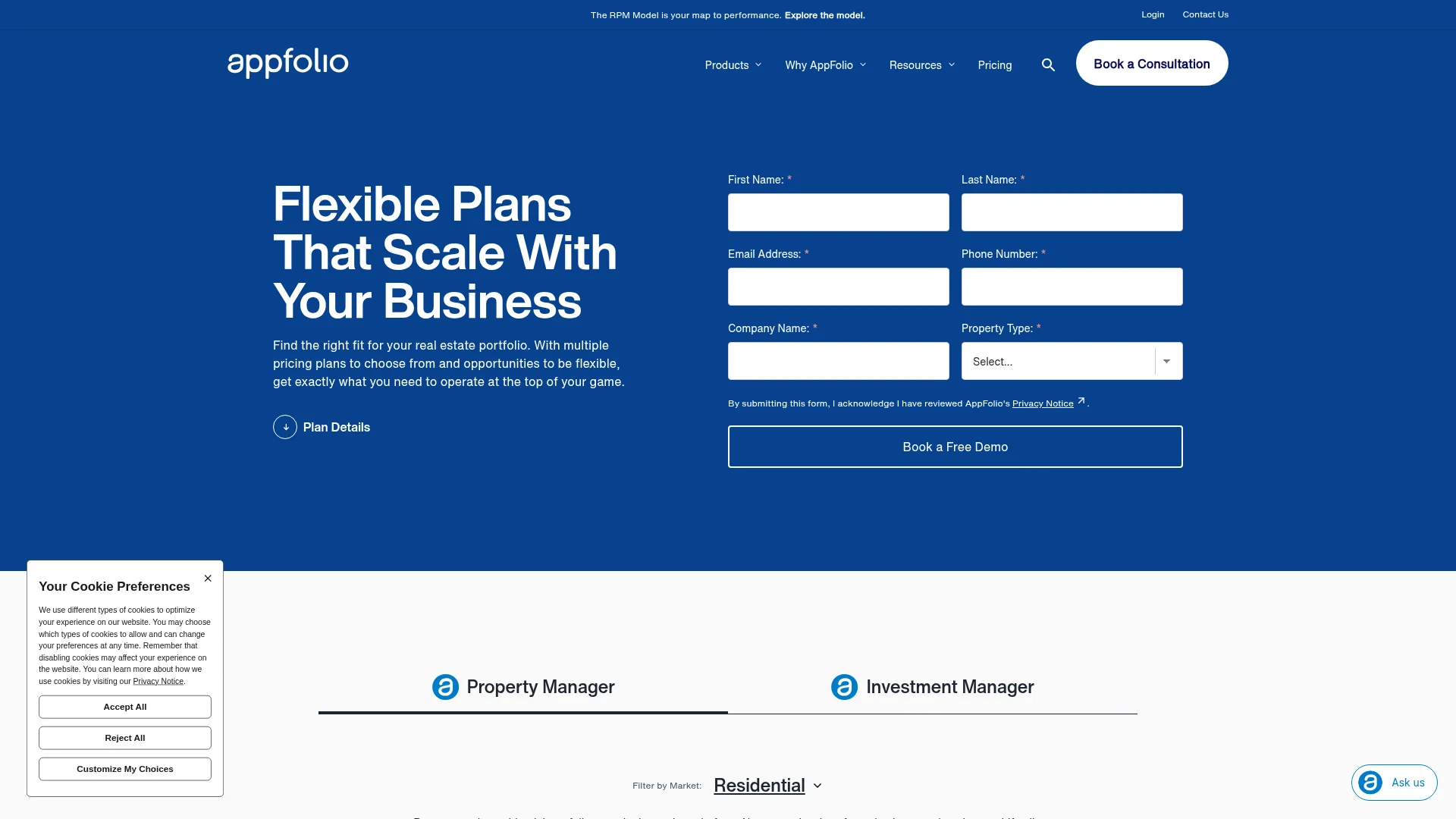
AppFolio won’t sell below 50 units — its pricing page says “minimum spend and 50 unit minimum apply” without publishing the spend (appfolio.com/pricing, 5 November 2026). Reported invoice figures put Core’s floor at $280–$298 a month with onboarding around $400 and up, none of it confirmed by AppFolio. The resident pays the $2.49 eCheck fee rather than the landlord, and cards run 2.99%. For a 100–250 unit manager who wants enterprise workflow — CRM, inspections at scale, API on higher tiers — it’s a genuine alternative, and our Buildium vs AppFolio comparison prices the crossover in detail. Below 100 units the honest answer is that the sales call will price you out or the minimum will eat the savings; either way you’ll know more after the demo than before it, which is not a compliment.
Which switch fits your portfolio
1–10 units. TurboTenant’s free tier if vacancies are the problem, Innago if tenant-side fees are the tiebreaker, Avail if leases are. For real accounting on a flat bill, Rentec Starter at $25 for up to 10 properties. Buildium at $65 a month is hard to defend at this size unless the learning curve is already sunk cost.
10–50 units. Books on a budget: Rentec Pro at $50–$100. Cheapest full platform: TenantCloud on annual billing ($350 Growth at up to 30 leases; $600 Pro at up to 60). Price past the cliff: DoorLoop from 41 doors. Free with growing pains: TurboTenant Free at $0; Pro costs $399/year for 11–30 units and $699/year for 31–60, so don’t price it as $199 across this band. Stay with Buildium at 21–40 units if the ecosystem is the point: Rentec Pro’s double-entry books cost less in this band ($50–$80), but Essential bundles native trust accounting, owner statements and 1099 e-filing on one platform, and our best-software-for-small-landlords roundup prices all of these side by side.
50–250 units. DoorLoop One is $199/month at 50 units, $250 at 100, and $475 at 250 (annual plan rate: $2.50/unit through 100, then $1.50 per additional unit). On price: Rentec PM at $2.50 per unit is $125 at 50 units and $250 at 100, matching DoorLoop One there; above 100 units DoorLoop’s $1.50 overage rate wins — $325 against $375 at 150 and $475 against $625 at 250. AppFolio for managers who need the enterprise workflow and can carry an unpublished minimum. Buildium Growth/Premium if owner statements and 1099 e-filing are the product — the onboarding fee stings once, then the books run themselves.
Ease of use. If the clunky interface is itself the switching reason, the free tiers land softest: TurboTenant and Avail are built for self-serve landlords, and Innago’s 4.9 Capterra score (2 November 2026) is the highest in this guide’s set. Among paid options, DoorLoop has the modern interface, but its 3.7 Trustpilot score (4 November 2026) says the polish stops when you need support. Rentec’s interface is one its own users call dated — choose it for the books, not the feel.
Stay with Buildium if… you need trust accounting and owner statements monthly, you’re at 21–40 units already trained on the platform, or a CPA asks for Buildium exports by name.
None of these if… your complaint is property-management software itself: below about five units, a spreadsheet, a dedicated email address and your bank’s ACH rails do the job for $0, as more than one r/PropertyManagement landlord has attested. The cost calculator prices every platform here at your exact unit count before you commit.
What landlords and review sites say
The review corpora point the same direction as the pricing. Buildium holds 4.5 out of 5 across 2,234 Capterra reviews and 4.3 out of 5 across 823 Trustpilot reviews (5 November 2026); DoorLoop runs 4.8 on Capterra (719 reviews) against 3.7 on Trustpilot (277 reviews, 4 November 2026) — easier to start, harder to get unstuck in. Innago’s 4.9 out of 5 on Capterra (539 reviews, 2 November 2026) is the highest score in the set.
Reddit’s pattern is portfolio-shaped. Mid-size landlords keep recommending Buildium on the accounting — “Buildium tends to be the sweet spot at 10-100 units,” per an r/PptyMgmtSoftware commenter who concedes the interface while sticking with it. In a 70-unit thread on switching, the consensus reply was “stick with Buildium… or if you must switch consider something like Rentec Direct.” And the migration warning recurs in the other direction: “I would have paid the minimum to avoid the turnover cost. Now I am established on buildium and may never make the switch,” one landlord wrote about AppFolio’s 50-unit floor. Those are anecdotes, not data — but the one that repeats is that switching costs a month of work, so switch for a reason that compounds.
FAQ
What is the cheapest real alternative to Buildium?
TenantCloud Starter at $180 a year ($15 a month) is the cheapest paid platform with real structure, capped at 10 leases. Rentec Starter at $25 flat is the cheapest with genuine double-entry accounting, capped at 10 properties. TurboTenant, Avail and Innago are $0 to the landlord with tenant-paid fees (verified 5 November 2026).
Is there a free alternative to Buildium?
Three: TurboTenant, Avail and Innago. All are free to the landlord with unlimited units; tenants pay $2–$2.50 per bank payment and applicants pay $30–$55 for screening. The free tiers do leasing and rent collection well and accounting poorly — none produces a Schedule E without upgrading.
How hard is it to migrate off Buildium?
Buildium exports data through its standard reports; how much imports cleanly depends on the receiving platform. Rentec Direct includes free setup and onboarding on every plan, which lowers the switching cost materially. DoorLoop cancellation is not self-service — export your reports before you commit. No vendor in this guide publishes a migration price; AppFolio’s onboarding is reported at $400 and up.
Is DoorLoop cheaper than Buildium?
Above 40 units, yes. Buildium’s Growth plan starts at $202 at unit 41 while DoorLoop One stays at its $199 minimum to 79 units and runs $250 at 100 against Buildium’s $400 all-in. Below 41 units Buildium wins on price at every count — $88.50 all-in at 10 units against DoorLoop’s $199 floor.
What’s the best Buildium alternative for a small landlord?
Under 10 units: TurboTenant’s free tier for vacancies, or Rentec Starter at $25 flat if you want real books. Both were verified against vendor pricing pages on 5 November 2026; the small-landlord comparison prices five more options at your unit count.
When does staying with Buildium make more sense?
When trust accounting, owner statements or 1099 e-filing are requirements — those run natively on one Buildium bill, while Rentec Pro charges less ($50–$80 at 21–40 units) for double-entry books without that bundled depth. If you’ve already paid the learning curve and the onboarding fee, a switch needs a compounding reason, not a cosmetic one.
Verdict: no universal winner, and that’s the point
If you’re leaving over price and you’re past 40 doors, DoorLoop’s $199 floor is the move — it undercuts Buildium’s Growth plan at every count from 41 to 100 and bundles more. If you’re leaving over cost and you’re under 25 doors, Rentec Direct is the accounting answer at roughly 45–51% of Buildium’s all-in bill at 5, 10 and 20 units ($35 against $76.75, $45 against $88.50, $50 against $112), with free onboarding. If you’re leaving because you were paying for books you weren’t reading, TurboTenant (or Innago, on cheaper tenant fees) gets you to $0 without losing leasing. If you’re above 100 doors and want an enterprise workflow, take the AppFolio demo — then make them beat DoorLoop’s published price.
And if none of those is your reason — if the books are fine, the onboarding is paid, and the complaints you read are about an interface you’ve already adapted to — the cheapest alternative to Buildium is the one you don’t switch to.