Innago vs RentRedi: $0 With Tenant Fees or $144 Flat (2026)
Innago is free for landlords; tenants pay $2 per ACH payment. RentRedi costs $144 a year flat. Fee math, tenant apps, screening and leases, checked 10 Nov 2026.
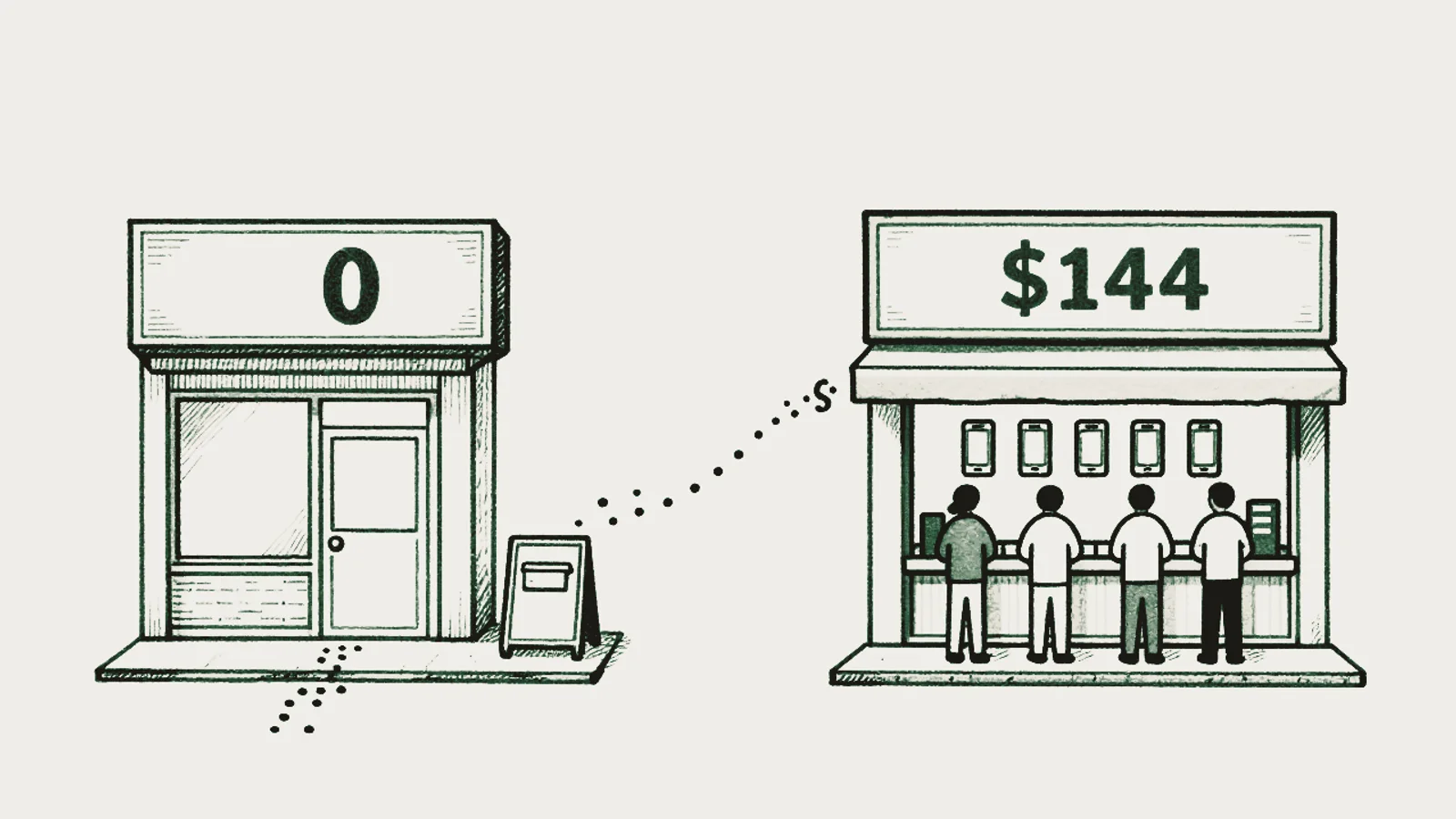
Pick Innago if your budget is $0 and your tenants can live with a $2 fee per bank payment: leases, screening, maintenance tickets and expense tracking cost landlords nothing, at any unit count. Pick RentRedi if you would rather pay $144 a year and hand tenants a better phone experience: a 4.8-rated app, $1 bank payments, cash deposits through Chime, P&L and Schedule E accounting, 24/7 chat. Innago wins on the landlord’s invoice, RentRedi on everything the tenant touches. What that $144 actually buys is broken out by plan and unit count. Every fee below was read from each vendor’s own pricing page and help center on 10 November 2026.
Disclosure: Landlord Method doesn’t earn a commission from Innago or RentRedi — no affiliate program for either is live on this site. Every price below comes from the vendors’ own pages and help centers, read 10 November 2026.
Quick comparison
| Innago | RentRedi | |
|---|---|---|
| Free tier reality | Free forever: no monthly fee, no contract, no unit cap | No free tier: $12/mo billed annually ($144/yr), $29.95 monthly |
| Tenant ACH fee | $2 per payment, tenant-paid | $1 per payment, tenant-paid |
| Tenant card fee | 2.99%, tenant-paid | 3.1% + $0.30, tenant-paid |
| Applicant screening | $30–35 (Experian) + $10 income check | $39.99 (TransUnion), $49.99 with income check |
| Leases | State-specific templates, e-sign included | Upload your own PDF, e-sign included on the plan we priced |
| Maintenance | Tickets with status updates | Photo/video tickets, Latchel add-on from $25/mo plus a per-unit fee |
| Accounting | Expense tracking + QuickBooks sync | AI receipts, bank feeds, P&L, Schedule E |
| Mobile apps | Apps exist; the website does the real work | Mobile-first, 4.8 out of 5 across ~15,000 ratings |
| Payout speed | 1–2 days published, 3-day first-payment hold | 2–3 business days |
| Support | Named contact, weekdays 9am–5pm EST | 24/7 live chat, tenant phone 9am–5pm EST |
Pricing: free but not free
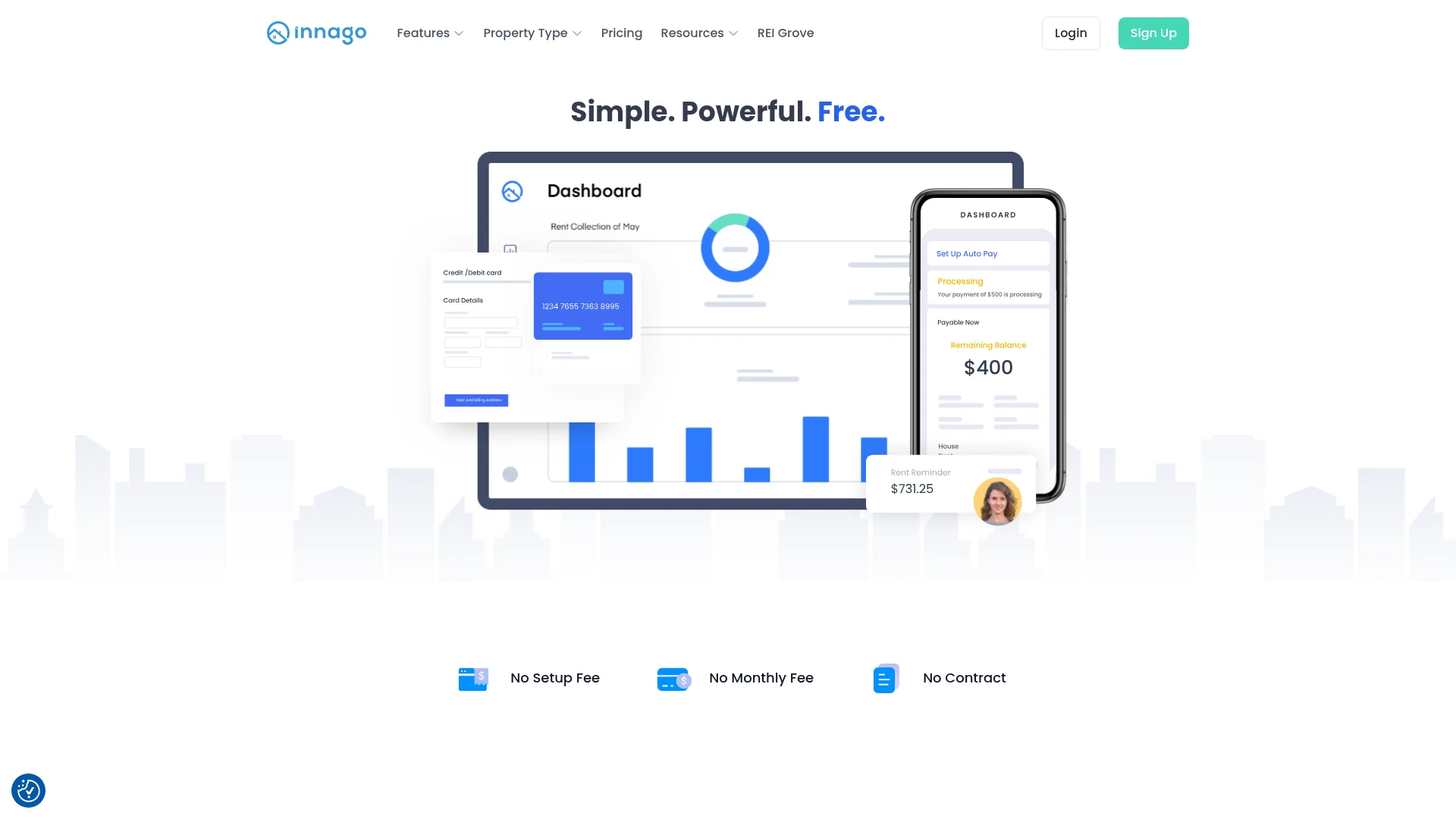
Innago charges the landlord nothing: “No monthly fee. No setup fee. No contract,” and the help center confirms “Innago costs nothing for landlords to use.” The bill lands on the tenant side — $2 per ACH payment, 2.99% on cards, both tenant-paid by default, with a Billing Settings toggle that lets you absorb either. Applicants pay $30–35 for credit, criminal and eviction screening, plus $10 for optional Plaid income verification, and there is no switch to bill screening to yourself. No paid tier, nothing to upgrade to; the usage fees are the whole business model.
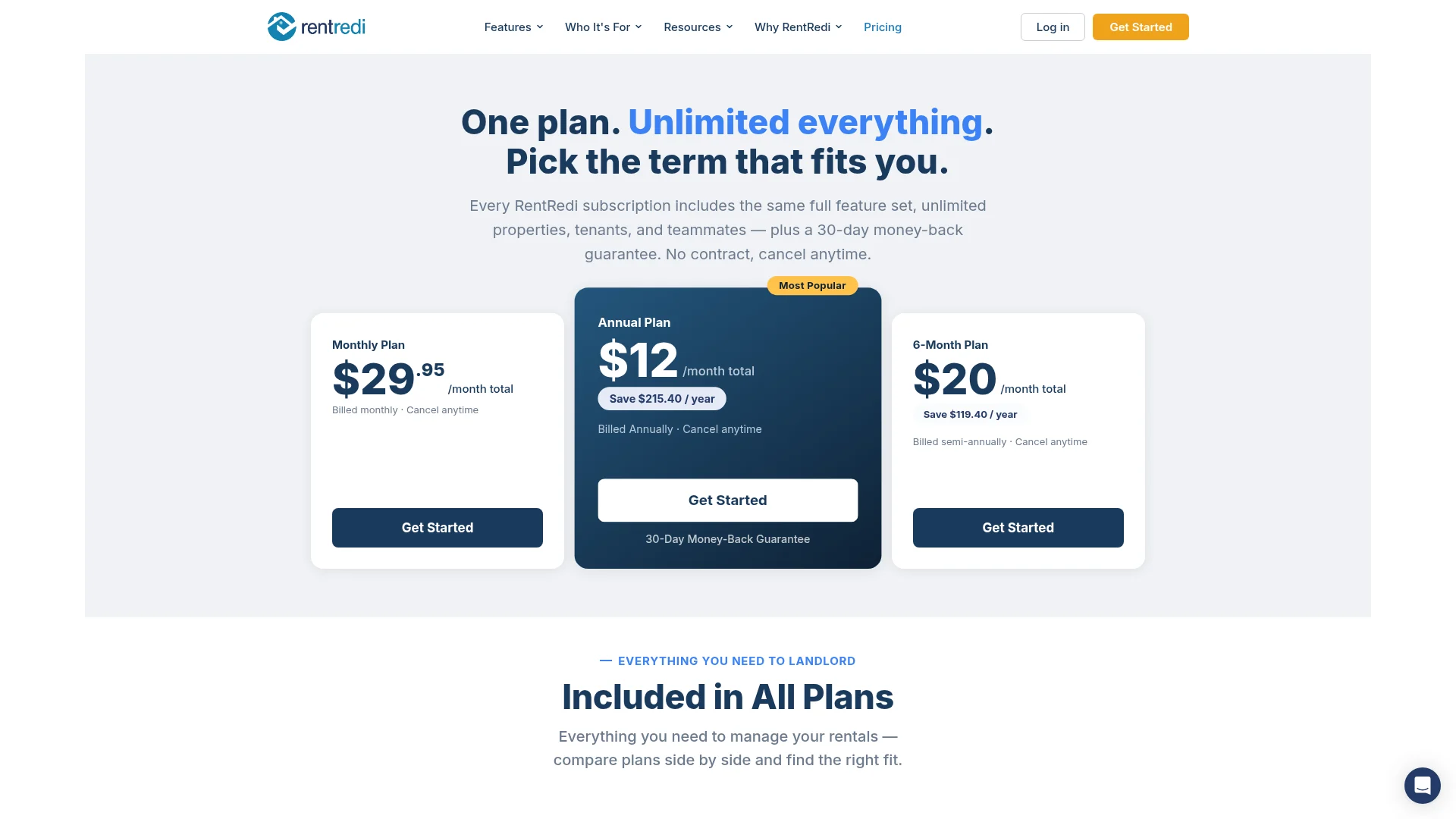
RentRedi sells one plan at three billing terms: $29.95 monthly, $20 on a 6-month term, or $12 billed annually — $144 a year at any unit count, unlimited tenants and bank connections, 30-day money-back guarantee (RentRedi’s pricing page, 10 November 2026). Tenants pay $1 per ACH payment or 3.1% plus $0.30 on cards; screening is $39.99, or $49.99 with Plaid verification, billed to the applicant by default, or to your card if you enable Cover the Screening Fee for a unit in Screening Rules. Credit reporting adds $5.99 a month, payable by either side. You can cover any convenience fee from Settings, and the mechanic matters: the fee comes out of the tenant’s payment, so a $100 bank payment deposits $99 to you.
Three units, three tenants at $1,500 a month paying by bank transfer, three applicants screened:
| Cost line, one year | Innago | RentRedi |
|---|---|---|
| Landlord subscription | $0 | $144 (annual plan) |
| Tenant ACH fees | $72 — tenants pay | $36 — tenants pay |
| Screening three applicants | $90–105 — applicants pay | $119.97 — tenants pay |
| A lease | $0: state templates + e-sign | $0: your own PDF + e-sign |
| One card payment of $1,500 rent, fee added on top (excluded from totals) | $44.85 to the tenant (2.99%) | $46.80 to the tenant (3.1% + $0.30) |
| Landlord’s outlay | $0 ($72 if you absorb every ACH fee) | $144 ($180 if you cover the ACH fees) |
| Total paid by everyone | $162–177 | $299.97 |
Read it by payer. On the landlord’s invoice the gap is total: $0 against $144, and absorbing every tenant ACH fee on Innago ($72) still beats RentRedi’s subscription alone. Counting every payer, Innago stays roughly $120–140 cheaper a year here, because RentRedi’s $1 ACH saves each tenant only $12 while its subscription and its $5-higher screening fee take that back. On cards it holds too: a tenant’s $1,500 payment costs $44.85 on Innago and $46.80 on RentRedi; cover RentRedi’s fee yourself and it grosses up to $48.30 so you still net $1,500.
Tenant experience compared
Application. Both run custom applications at no charge to the landlord. RentRedi wraps them in a pipeline: prequalification questions, phone-camera document uploads, applicant chat, and an auto-screening switch that attaches the background check to every application. Innago’s builder is more manual — templates, custom questions, reports back in minutes — with no pipeline behind it.
Payments. RentRedi’s per-payment fees are lower: $1 against $2, so a tenant on autopay saves $12 a year. It also accepts routes Innago doesn’t: Apple Pay and Google Pay in the app, and cash — routed through a Chime account the tenant opens first and connects to RentRedi as a payment method (RentRedi’s help center, 10 November 2026). Chime takes cash at retailers such as Walgreens or Duane Reade, free at those two, and lists 90,000+ deposit locations including Walmart, CVS and Dollar General, where the retailer charges a small fee (Chime’s own pages, 10 November 2026). Innago records cash and checks as manual ledger entries; it does not collect them. On speed, RentRedi publishes 2–3 business days. Innago’s FAQ promises 1–2 but holds a tenant’s first payment and any new funding source for three, and its users report three to four — the biggest complaint in our full Innago review.
Portal UX. RentRedi’s home turf. Its app carries 4.8 out of 5 across roughly 15,000 App Store ratings, the tenant side runs a home screen with rent, requests, documents and chat, and the app ships in Spanish. Innago has landlord and tenant apps too, but its own users name the gap: “The app experience feels like a lightweight version of the web experience,” one r/Landlord user wrote — “certain features you have to be on the website.”
Reddit’s split mirrors the fee tables. Innago’s long-running r/Landlord thread — “[Landlord US-VA] Is there a reason more people aren’t using Innago?” — draws praise for lease customization, the assigned support contact (“I have gotten really quick answers from my account support person (who is specifically assigned to me - bonus)”) and the price, alongside the payout complaints. RentRedi’s record splits harder: multi-year users report it works and support answers, while r/RentalInvesting threads run from “I would not recommend RentRedi… I find it clunky and not user-friendly” to “I hate RentRedi so much… pretty much everything about the interface is confusing.” That critique targets the desktop dashboard, which 2026 reviewers call over-engineered; the mobile app keeps the high rating.
Maintenance and communication
RentRedi treats maintenance as a product. Tenants submit requests with photos or 5-second video, roommates on one lease share a single ticket, you assign work to vendors or teammates, and tenants watch the status move. A BiggerPockets user weighing all four platforms in this comparison liked exactly that: “tenants can quickly submit maintenance request and I can have my handymen take care of it directly without my coordination.” Behind it sits Latchel, the paid coordination add-on — plans start at $25 a month plus a per-unit fee, with budget limits and your own preferred vendors (RentRedi help center, 10 November 2026). Communication runs on two-way chat with push notifications, plus 24/7 live chat.
Innago handles the basics — tickets from the tenant app, status updates, messaging, deposit returns — and stops there. There is no dispatch desk and no coordination service, so the moment maintenance becomes a management job you are the dispatcher. Its support model is the compensation: a named account contact, weekdays 9–5 EST, which users single out as fast. The friction is the interface, not the feature list — settings nested in ways six-year users still call confusing, and a listing-photos section one landlord said “constantly doesn’t load no matter what I do.”
Screening and leases
Screening costs per applicant, and both platforms bill the applicant by default. Who may pick up the fee is where they part: Innago gives the landlord no way to absorb screening; RentRedi lets you cover it per unit — Leasing → Screening Rules → Cover the Screening Fee, charged to the card on your account.
| Innago | RentRedi | |
|---|---|---|
| Credit, criminal, eviction | $35 (Experian); $30 without eviction | $39.99 (TransUnion) |
| With income verification | +$10 (Plaid) | +$10 (Plaid, certified) |
| Who pays | The applicant only — no landlord-paid option | The tenant by default; you can cover it per unit in Screening Rules |
| Automation | Manual requests, reports back in minutes | Auto-screening on every application, one account per adult applicant |
Innago is $5–10 cheaper per screen but thinner. Two 2026 reviewers documented in our Innago review received clean reports on applicants whose public court records showed prior evictions and criminal history; run your own records check on finalists whichever tool you use. RentRedi costs more and automates more — the screening attaches to the application itself, and each adult applicant applies through a separate account, which keeps roommates from being screened under one name. Switch on Cover the Screening Fee and the gap becomes your money: three applicants a turn cost you $119.97 on RentRedi against nothing on Innago.
Leases split cleanly. Innago generates state-specific leases in-product and e-signs them, and also uploads your own documents; the friction is renewals, where you cannot amend terms with a rent increase, so a mid-term change means a new lease and fixed-up invoices. RentRedi has no lease builder at all: you upload your PDF, send it out for e-signature, and tenants sign on their phones with a selfie-and-ID check. If you want documents produced for you, Innago is the only one of the two that makes them; if you already have an attorney-drafted lease you reuse, RentRedi’s workflow finishes in minutes.
Innago vs RentRedi vs the rest
Avail is the third free-core platform, and the “innago vs avail” demand comes down to one difference: Avail charges tenants $2.50 per ACH payment on its free tier, and Unlimited Plus at $9 per unit a month waives that and buys next-business-day deposits — $1,080 a year at 10 units, if Innago’s payout holds are your sticking point.
TurboTenant is the other $0-for-landlords platform, and it loses to Innago on screening price ($55 on Free against $30–35). We compared it with RentRedi line by line in our RentRedi vs TurboTenant breakdown — the pattern repeats: free-to-landlord tools shift cost to tenants, and the cheapest pick depends on who you are willing to charge.
TenantCloud starts at $15 a month ($180 a year) and brings more accounting structure than either tool here. In the same BiggerPockets thread, a TenantCloud user of more than a year was already leaving: “I’ve been using Tenantcloud for over a year and am looking to make a switch… their support isn’t great.”
Hemlane took the hardest hit in that thread — “Do not use Hemelane,” one user wrote, faulting tenant communication and search while liking the maintenance interface — and its per-unit pricing scales the wrong way as you grow; Hemlane against TurboTenant works out where the repair coordinator starts to justify the $2 a door. For the wider field, see our free property management software comparison.
Verdict by landlord type
Pick Innago at 1–10 units if $0 is the point. Leasing, payments, screening and maintenance at no subscription, no unit cap, nothing to upgrade to. Your tenants pay $2 per bank payment, or you absorb it for $24 per unit a year at one payment a month — cheaper than RentRedi’s flat $144 through five units, level at six. Accept the trade-offs knowingly: payout holds on first payments, an app that defers to the website, expense tracking that stops where double-entry begins, and screening reports worth double-checking against court records.
Pick RentRedi if you run the business from your phone, or past roughly 10 units. The flat $144 never scales, the mobile experience is the best in this tier, cash-paying tenants have a real payment route, Schedule E summaries are included, and 24/7 chat is standard. The costs are real: no free tier, no lease documents generated for you, a desktop dashboard critics call over-engineered, and Latchel coordination or credit reporting priced separately.
When neither fits. If your books are the bottleneck, TenantCloud or a free ledger like Stessa does more than either. If you need owner statements, trust accounting or a general ledger, you have outgrown both — that is where the paid platforms in our small-landlord comparison begin.
FAQ
Is Innago really free?
Yes. Innago’s pricing page and help center state no monthly fee, setup fee, contract or unit cap, with every feature included (10 November 2026). The costs sit on the tenant and applicant side — $2 per ACH payment, 2.99% on cards, $30–35 per screening report — and you can absorb the payment fees in Billing Settings so tenants pay nothing.
Why is Innago free if it does everything?
Innago earns from the usage fees tenants and applicants pay — $2 per bank payment, 2.99% on cards, $30–35 per screening report. Those scale with rent collected and applications run, so a bigger portfolio earns Innago more while the landlord’s invoice stays at zero. RentRedi inverts it: the landlord pays $144 a year and tenants pay smaller fees.
Which has the better tenant app, Innago or RentRedi?
RentRedi. Its app holds 4.8 out of 5 across roughly 15,000 App Store ratings and ships in Spanish, with Apple Pay, Google Pay and cash deposits through Chime. Innago’s apps cover the essentials, but its own users say core features still require the website.
What does tenant screening cost on each?
Innago applicants pay $30 for credit and criminal reports or $35 with eviction history, plus $10 for Plaid income verification. RentRedi tenants pay $39.99, or $49.99 with Plaid income verification. Both bill the applicant by default; RentRedi is the only one where you can move that fee to your own card, per unit, in Screening Rules. Both report through a bureau — Experian for Innago, TransUnion for RentRedi.
Which is cheaper for a small portfolio?
Innago, on every measure. A landlord with three units and three bank-paying tenants pays $0 a year on Innago versus $144 on RentRedi, and total fees across all three payers run $162–177 against $299.97. RentRedi’s tenants save $12 each on ACH fees, which does not cover the subscription they are indirectly funding.